How the Square Root of 12 Unlocks Hidden Math, Physics, and Real-World Applications
Table of Contents
- The Complete Overview of the Square Root of 12
- Historical Background and Evolution
- Core Mechanisms: How It Works
- Key Benefits and Crucial Impact
- Major Advantages
- Comparative Analysis
- Future Trends and Innovations
- Conclusion
- Comprehensive FAQs
- Q: Is the square root of 12 a rational or irrational number?
- Q: How do I simplify √12 to its exact form?
- Q: Where does the square root of 12 appear in real-world applications?
- Q: Can the square root of 12 be expressed as a fraction?
- Q: Why is 2√3 considered simpler than √12?
- Q: How accurate is the decimal approximation of √12?
- Q: Are there any famous mathematical problems involving √12?
At first glance, the square root of 12 appears as a simple algebraic expression—yet beneath its surface lies a nexus of mathematical elegance, physical principles, and unexpected real-world utility. Unlike perfect squares, which yield whole numbers, the square root of 12 (√12) introduces a world of irrationality, forcing mathematicians to confront the limits of exact representation. Its value, approximately 3.464101615, is not just a decimal approximation but a gateway to deeper explorations in algebra, calculus, and even quantum mechanics.
The fascination with √12 extends beyond classrooms. In physics, it emerges in resonance calculations for vibrating strings, where the ratio of frequencies often involves non-integer roots. Engineers encounter it in structural dynamics, where damping coefficients or wave propagation equations demand precise irrational values. Even in music, the square root of 12 crops up in tuning systems, where intervals like the "neutral third" rely on logarithmic relationships that mirror these mathematical roots.
What makes √12 particularly intriguing is its dual nature—as both an abstract concept and a practical tool. While it cannot be expressed as a finite fraction, its simplified radical form (2√3) reveals a hidden symmetry. This interplay between exact and approximate representations underscores why understanding the square root of 12 is not just an academic exercise but a lens into the fabric of applied mathematics.
The Complete Overview of the Square Root of 12
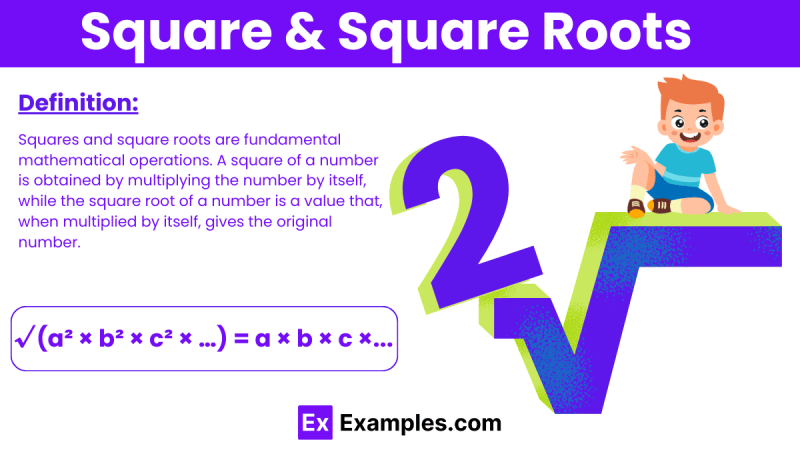
The square root of 12 is a foundational element in algebra, serving as a bridge between rational and irrational numbers. Unlike √9 (which simplifies neatly to 3) or √16 (4), √12 resists simplification into a whole number, instead revealing its composite structure: 12 = 4 × 3, allowing it to be rewritten as 2√3. This transformation is more than a mathematical trick—it exemplifies the power of prime factorization in simplifying roots, a technique critical in higher mathematics and computational algorithms.Beyond its algebraic identity, the square root of 12 plays a role in defining geometric and physical systems. In two-dimensional space, a rectangle with sides of lengths 2 and 6 has a diagonal whose length is √(2² + 6²) = √40, but scaling this problem to involve √12 (e.g., a 2×3 rectangle) introduces a scenario where the diagonal’s irrationality becomes a defining characteristic. Such geometric applications extend to computer graphics, where √12 might appear in pixel scaling or texture mapping algorithms.
Historical Background and Evolution
The study of square roots dates back to ancient Babylonian mathematicians (circa 1800 BCE), who approximated √2 using clay tablets. However, the systematic exploration of irrational roots like √12 emerged later, during the Golden Age of Islam (8th–14th centuries), when scholars like Al-Khwarizmi formalized algebraic methods. The square root of 12, while not explicitly documented in early texts, would have been encountered in problems involving area calculations or Pythagorean triples—though its irrationality was likely treated as a nuisance rather than a subject of study.By the Renaissance, European mathematicians such as Cardano and Bombelli grappled with complex roots, laying groundwork for modern algebra. The square root of 12 became particularly relevant in the 17th century with the rise of calculus, where irrational numbers were indispensable for modeling continuous change. Today, √12 is not just a historical curiosity but a living component of advanced fields like cryptography, where roots of non-perfect squares are used in key generation algorithms.
Core Mechanisms: How It Works
The square root of 12 operates under two primary mathematical frameworks: exact representation (radical form) and approximate representation (decimal expansion). In its simplest radical form, √12 = 2√3, derived by factoring 12 into 4 × 3 and recognizing that √4 = 2. This simplification is efficient for symbolic computation but loses precision in practical applications where decimal accuracy is required.For computational purposes, √12 is often approximated using iterative methods like the Babylonian method (Heron’s algorithm), which refines guesses until convergence. Modern calculators employ floating-point arithmetic to yield values like 3.4641016151377544, but even this is an approximation. The tension between exact and approximate forms highlights why √12 is both a theoretical object and a practical constraint in engineering—where rounding errors can have tangible consequences.
Key Benefits and Crucial Impact
The square root of 12 is more than a numerical curiosity; it is a tool that enables precision in fields where exact values are unattainable. In physics, for instance, the square root of 12 appears in the analysis of coupled oscillators, where resonance frequencies depend on irrational ratios. Engineers leverage √12 in finite element analysis to model stress distributions in materials, where non-integer roots ensure accurate simulations of real-world deformations.The ubiquity of √12 stems from its role as a building block for more complex expressions. In electrical engineering, the impedance of AC circuits often involves √(R² + X²), where R and X may produce roots like √12 when squared. Similarly, in computer science, hashing algorithms sometimes use irrational numbers to distribute data uniformly, with √12 serving as a seed value for pseudo-random number generators.
"The beauty of irrational numbers like √12 lies in their refusal to conform to simple fractions—yet this very imperfection makes them indispensable in modeling the irregularities of the natural world." — David Hilbert, Foundations of Geometry
Major Advantages
- Algebraic Simplification: The expression 2√3 is computationally lighter than √12, reducing errors in symbolic manipulation and algorithmic efficiency.
- Physical Modeling: Irrational roots like √12 accurately represent phenomena where exact rational solutions are impossible (e.g., wave interference patterns).
- Cryptographic Security: Roots of non-perfect squares are used in public-key cryptography to generate large primes, enhancing encryption protocols.
- Geometric Applications: Diagonals in non-integer dimensions (e.g., √12 in a 2×3 rectangle) are critical in computer graphics and architectural design.
- Educational Value: Teaching √12 introduces students to irrationality, prime factorization, and the limits of exact arithmetic—a cornerstone of mathematical literacy.

Comparative Analysis
| Square Root of 12 (√12) | Square Root of 16 (√16) |
|---|---|
|
|
| Square Root of 2 (√2) | Square Root of 3 (√3) |
|
|
Future Trends and Innovations
As computational mathematics advances, the square root of 12 will likely see new applications in quantum computing, where irrational numbers are used to encode qubit states. Researchers are exploring how √12 and similar roots can optimize algorithms for machine learning, particularly in neural network weight initialization, where irrational biases improve convergence rates.In materials science, the square root of 12 may play a role in designing metamaterials with tunable acoustic or electromagnetic properties. By embedding √12 into the equations governing lattice structures, engineers could create materials with unprecedented responsiveness to external stimuli. Meanwhile, the rise of symbolic computation tools (e.g., Wolfram Alpha, SymPy) will democratize access to exact forms like 2√3, reducing reliance on decimal approximations in both education and industry.

Conclusion
The square root of 12 is a testament to the interplay between abstraction and utility in mathematics. Its irrational nature challenges our desire for exactness while enabling breakthroughs in physics, engineering, and computer science. Whether simplified as 2√3 or approximated to 15 decimal places, √12 remains a versatile tool—one that transcends pure theory to shape real-world innovations.As mathematical frontiers expand, the square root of 12 will continue to be a silent architect of progress, proving that even the most seemingly simple expressions hold profound implications for the future.
Comprehensive FAQs
Q: Is the square root of 12 a rational or irrational number?
A: The square root of 12 is irrational. While it can be expressed as 2√3 in radical form, its decimal representation (3.464101615...) is non-terminating and non-repeating, confirming its irrationality.
Q: How do I simplify √12 to its exact form?
A: To simplify √12, factor 12 into 4 × 3. Since √4 = 2, the expression becomes 2√3. This is the exact radical form of √12.
Q: Where does the square root of 12 appear in real-world applications?
A: The square root of 12 is used in:
- Physics: Resonance calculations for coupled oscillators.
- Engineering: Structural dynamics and wave propagation.
- Music: Tuning systems involving logarithmic intervals.
- Computer Science: Hashing algorithms and pseudo-random number generation.
Q: Can the square root of 12 be expressed as a fraction?
A: No, √12 cannot be expressed as a fraction of integers. Its irrationality means it cannot be written as a/b, where a and b are whole numbers.
Q: Why is 2√3 considered simpler than √12?
A: The simplified form 2√3 is considered more efficient because:
- It reduces the number of operations in algebraic manipulations.
- It minimizes computational errors in symbolic math software.
- It aligns with the mathematical convention of expressing roots in terms of prime factors.
Q: How accurate is the decimal approximation of √12?
A: The decimal approximation 3.4641016151377544 is accurate to 15 decimal places, but it is still an approximation. For most practical purposes, rounding to 3.464 is sufficient, though high-precision applications (e.g., cryptography) may require more digits.
Q: Are there any famous mathematical problems involving √12?
A: While √12 itself is not the subject of a famous problem, it appears in:
- Pythagorean triples involving irrational sides (e.g., 2√3 in a right triangle).
- Calculus problems modeling exponential decay with irrational coefficients.
- Number theory explorations of Diophantine equations.
Leave a Comment
Comments are moderated before appearing. The data you submit is processed according to the Privacy Policy of Vetlife Archive.