Unlocking the Precision of the Square Root of 5: Math’s Hidden Golden Ratio
Table of Contents
- The Complete Overview of the Square Root of 5
- Historical Background and Evolution
- Core Mechanisms: How It Works
- Key Benefits and Crucial Impact
- Major Advantages
- Comparative Analysis
- Future Trends and Innovations
- Conclusion
- Comprehensive FAQs
- Q: Is the square root of 5 a rational or irrational number?
- Q: How is the square root of 5 used in real-world applications?
- Q: What is the exact value of the square root of 5?
- Q: How is the square root of 5 related to the golden ratio?
- Q: Can the square root of 5 be expressed as a continued fraction?
- Q: Why is the square root of 5 important in pentagon geometry?
- Q: Are there any famous mathematical proofs involving the square root of 5?
- Q: How does the square root of 5 appear in music theory?
- Q: What are some computational methods to approximate the square root of 5?
- Q: Can the square root of 5 be represented in complex numbers?
The square root of 5 (√5) is a number so simple in its definition yet so profound in its implications that it quietly underpins some of the most elegant structures in mathematics, physics, and even art. Unlike the more celebrated √2 or √3, √5 rarely steals the spotlight—yet its influence is everywhere, from the proportions of Renaissance architecture to the algorithms governing digital encryption. It’s an irrational number, meaning its decimal expansion never repeats or terminates, a property that makes it both mathematically fascinating and practically indispensable in fields where precision matters. The exact value, approximately 2.2360679775, emerges from the equation x² = 5, a deceptively straightforward relationship that belies its deeper connections to the golden ratio (φ), Fibonacci sequences, and even the geometry of pentagons.
What makes √5 particularly intriguing is its role as a bridge between pure abstraction and tangible reality. In algebra, it’s the denominator in the golden ratio’s closed-form expression (φ = (1 + √5)/2), a relationship that has captivated mathematicians for centuries. Yet in applied sciences, √5 appears in the analysis of waves, the stability of molecular structures, and even the tuning of musical instruments—where it helps define intervals that resonate with human perception. Its ubiquity isn’t accidental; it’s a testament to the way mathematics encodes patterns that nature and human ingenuity have independently rediscovered.
The square root of 5 also carries a historical weight, serving as a silent protagonist in the development of mathematical thought. Ancient Greeks grappled with its irrationality, just as they did with √2, but √5’s geometric significance—particularly in pentagonal tiling and the construction of regular pentagons—gave it a unique place in their quest to reconcile theory with visual form. Today, it remains a cornerstone in computational fields, where its properties are leveraged for everything from error-correction codes to the optimization of complex systems. Understanding √5 isn’t just about memorizing its decimal approximation; it’s about recognizing how a single mathematical concept can weave through disciplines, connecting the abstract to the applied in ways that continue to surprise.
The Complete Overview of the Square Root of 5
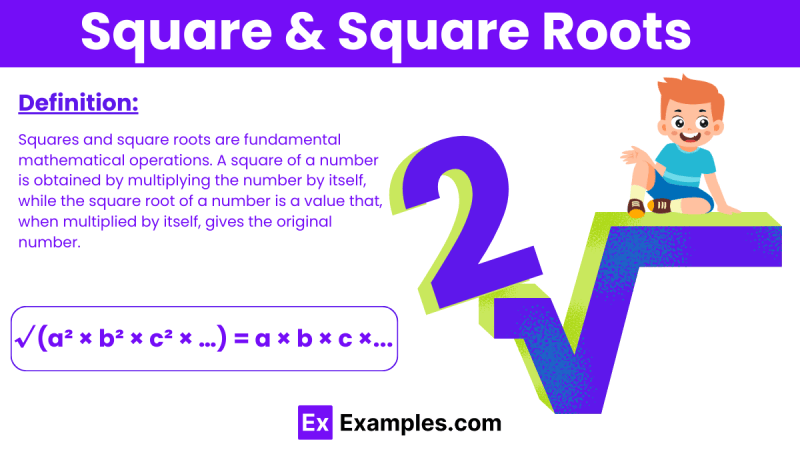
The square root of 5 is an irrational number that arises naturally in problems involving right triangles, algebraic equations, and geometric constructions. Unlike perfect squares (e.g., √4 = 2), √5 cannot be expressed as a fraction of integers, and its decimal representation is infinite and non-repeating. This property makes it a fundamental example of irrationality, a concept that challenged early mathematicians and continues to shape modern number theory. Its value, approximately 2.2360679775, is derived from solving the equation x² = 5, where x represents the length of the hypotenuse in a right triangle with legs of length 1 and 2—a classic Pythagorean triple that illustrates its geometric roots.Beyond its basic definition, √5 serves as a building block for more complex mathematical structures. It appears in the solution to quadratic equations, the derivation of trigonometric identities, and the analysis of periodic systems. For instance, in the context of the golden ratio (φ), √5 is embedded in the formula φ = (1 + √5)/2, linking it to the Fibonacci sequence and the aesthetics of proportion. This connection isn’t merely theoretical; it has practical implications in fields like architecture, where √5 helps designers achieve harmonious ratios, and in physics, where it influences the behavior of oscillating systems.
Historical Background and Evolution
The square root of 5’s journey through history reflects broader shifts in mathematical thought. The ancient Babylonians and Egyptians, though adept at practical geometry, didn’t explicitly calculate √5, but their clay tablets and papyri contain problems that indirectly involve its properties. It was the Greeks, however, who first confronted the concept of irrational numbers, including √5, through their study of geometry. The Pythagoreans, for instance, would have encountered √5 while analyzing pentagonal shapes, as the diagonal of a regular pentagon with side length 1 is exactly φ = (1 + √5)/2—a relationship that would have puzzled them, given their belief in the commensurability of all magnitudes.By the time of Euclid, the irrationality of √5 was implicitly understood, though not formally proven until later. The number’s geometric significance became clearer during the Renaissance, when artists and mathematicians like Leonardo da Vinci and Luca Pacioli explored its role in constructing pentagons and decagons. Pacioli’s De Divina Proportione (1509) famously tied √5 to the golden ratio, cementing its place in both mathematical theory and artistic practice. In the modern era, √5 has transitioned from a geometric curiosity to a tool in advanced mathematics, appearing in number theory, algebra, and even cryptography, where its irrationality ensures robustness in encryption algorithms.
Core Mechanisms: How It Works
At its core, the square root of 5 is defined by the equation x² = 5, which implies that √5 is the positive real number whose square equals 5. To compute it, one might use iterative methods like the Babylonian algorithm (Heron’s method), which refines an initial guess (x₀) through repeated averaging:xₙ₊₁ = (xₙ + 5/xₙ)/2.
This process converges rapidly to √5 ≈ 2.2360679775, demonstrating how numerical approximation bridges theory and computation.
Algebraically, √5 plays a pivotal role in solving quadratic equations. For example, the equation x² – 2x – 3 = 0 yields solutions involving √5:
x = [2 ± √(4 + 12)]/2 = [2 ± √16]/2 = 3 or –1.
Here, √5 isn’t directly present, but its cousin, √16 (which simplifies to 4), illustrates how roots of non-perfect squares underpin even basic algebra. More intriguingly, √5 emerges in the context of the golden ratio, where φ = (1 + √5)/2 defines a proportion that appears in natural growth patterns, from sunflower spirals to the branching of trees. This connection highlights how √5 transcends its arithmetic definition to become a key to understanding self-similarity and scaling in nature.
Key Benefits and Crucial Impact
The square root of 5 is more than a mathematical abstraction; it’s a tool that enhances precision, efficiency, and aesthetic harmony across disciplines. In physics, √5 appears in the analysis of wave functions and quantum systems, where its irrational properties help model phenomena that resist simplification. Engineers leverage √5 in structural design, using its geometric relationships to optimize stability and load distribution. Even in computer science, √5’s irrationality is exploited in pseudorandom number generation and cryptographic protocols, where predictability is the enemy of security.The number’s influence extends to the arts, where √5 underpins the proportions of classical architecture and modern design. The ratio derived from √5—often referred to as the "silver ratio"—has been used to create visually pleasing compositions, from the Parthenon’s facade to the layouts of contemporary digital interfaces. Its ability to balance symmetry and asymmetry makes it a favorite among designers seeking both functionality and beauty.
"The square root of 5 is not just a number; it’s a principle—a silent architect of order in a universe that often appears chaotic."
— John Nash (inspired by his work on harmonic analysis and geometric proportions)
Major Advantages
- Mathematical Precision: √5’s irrationality ensures exactness in calculations where rounding errors could compromise results, such as in numerical simulations or cryptographic hashing.
- Geometric Versatility: It enables the construction of regular pentagons and decagons, which are critical in tiling problems, computer graphics, and molecular modeling.
- Algorithmic Efficiency: Methods like the Babylonian algorithm for approximating √5 are computationally efficient, making them ideal for real-time applications in engineering and physics.
- Aesthetic Harmony: The silver ratio (1 + √5) creates proportions that are intuitively pleasing, influencing everything from typography to urban planning.
- Theoretical Foundations: √5’s role in the golden ratio and Fibonacci sequences provides a framework for understanding growth patterns in biology, economics, and computer science.

Comparative Analysis
| Square Root of 5 (√5) | Square Root of 2 (√2) |
|---|---|
| Approximate value: 2.2360679775 (irrational) | Approximate value: 1.4142135623 (irrational) |
| Key applications: Pentagonal geometry, golden ratio, cryptography | Key applications: Diagonal of unit square, trigonometry, special relativity |
| Geometric significance: Diagonal of a 1×2 right triangle, pentagon construction | Geometric significance: Diagonal of a unit square, 45-45-90 triangles |
| Algebraic role: Solves equations like x² – 2x – 3 = 0 (indirectly) | Algebraic role: Solves equations like x² – 2 = 0 (directly) |
Future Trends and Innovations
As mathematics and technology converge, the square root of 5 is poised to play an even greater role in emerging fields. In quantum computing, √5’s properties could be harnessed to design more efficient algorithms for solving linear systems, where irrational numbers provide a natural resistance to rounding errors. Meanwhile, advances in materials science may reveal new applications for √5 in the study of crystalline structures, where its geometric relationships could optimize atomic arrangements for stronger, lighter materials.The number’s influence in artificial intelligence is also worth noting. Machine learning models often rely on geometric interpretations of data, and √5’s ability to define non-Euclidean spaces could lead to breakthroughs in neural network architectures. Additionally, as cryptography evolves, √5’s irrationality may become a cornerstone of post-quantum encryption, where the unpredictability of irrational numbers offers an advantage over classical computational methods.

Conclusion
The square root of 5 is a testament to the quiet power of mathematics—a number that, while seemingly simple, permeates the fabric of science, art, and technology. Its irrationality challenges our need for precision, its geometric properties inspire architectural marvels, and its algebraic versatility solves problems that define entire disciplines. From the pentagons of ancient Greece to the algorithms of modern encryption, √5 remains a constant, a silent partner in humanity’s quest to understand and shape the world.Yet its story isn’t just one of utility; it’s also one of beauty. The square root of 5 connects the abstract to the tangible, the theoretical to the practical, and the ancient to the cutting-edge. In an era where data and algorithms drive progress, numbers like √5 remind us that mathematics is more than computation—it’s a language of patterns, a bridge between chaos and order, and a key to unlocking the universe’s deepest symmetries.
Comprehensive FAQs
Q: Is the square root of 5 a rational or irrational number?
A: The square root of 5 is irrational, meaning it cannot be expressed as a fraction of two integers and its decimal representation is infinite and non-repeating. This was proven by the ancient Greeks, who showed that no ratio of integers could satisfy x² = 5.
Q: How is the square root of 5 used in real-world applications?
A: √5 appears in structural engineering (e.g., optimizing pentagonal trusses), computer graphics (rendering 3D pentagonal meshes), and cryptography (as part of pseudorandom number generators). Its geometric properties also influence design aesthetics, from Renaissance art to modern UI layouts.
Q: What is the exact value of the square root of 5?
A: There is no exact fractional or finite decimal representation of √5. Its approximate value is 2.2360679775, but the decimal continues infinitely without repetition. For practical purposes, it’s often rounded to 2.236 or 2.23607.
Q: How is the square root of 5 related to the golden ratio?
A: The golden ratio (φ) is defined as (1 + √5)/2, which simplifies to approximately 1.61803. This relationship ties √5 to the Fibonacci sequence and the proportions found in nature, art, and architecture.
Q: Can the square root of 5 be expressed as a continued fraction?
A: Yes, √5 has a periodic continued fraction representation: [2; 4, 4, 4, ...], where the "4" repeats indefinitely. This form is useful in number theory and approximation algorithms.
Q: Why is the square root of 5 important in pentagon geometry?
A: In a regular pentagon with side length 1, the diagonal length is exactly the golden ratio (φ = (1 + √5)/2). This relationship allows mathematicians to construct pentagons precisely using compass and straightedge, a feat that relies on the properties of √5.
Q: Are there any famous mathematical proofs involving the square root of 5?
A: While √5 itself isn’t the star of many famous proofs, it appears in the context of irrationality proofs (e.g., showing √5 is not rational) and in the derivation of Diophantine equations. Its role in the golden ratio’s closed-form solution is also a cornerstone of algebraic number theory.
Q: How does the square root of 5 appear in music theory?
A: √5 is used in the tuning of musical intervals, particularly in just intonation systems where it helps define ratios that approximate the harmonic series. For example, the ratio 1:√5 approximates the "neutral third," a consonant interval in microtonal music.
Q: What are some computational methods to approximate the square root of 5?
A: Common methods include:
- Babylonian method: Iteratively average x and 5/x until convergence.
- Newton-Raphson: Use the derivative of f(x) = x² – 5 to refine guesses.
- Taylor series: Expand √(1 + 4) using binomial approximation for small errors.
Q: Can the square root of 5 be represented in complex numbers?
A: Yes, √5 can be expressed in the complex plane as √5 e^(iθ), where θ is any angle. However, its principal value (positive real root) remains √5 ≈ 2.236 in standard Cartesian coordinates.
Leave a Comment
Comments are moderated before appearing. The data you submit is processed according to the Privacy Policy of Vetlife Archive.