How to spot a phishing email and protect your data instantly
Table of Contents
- Recognizing the Basics of Phishing Emails
- Core Definition and Primary Goals of Phishing Emails
- Common Types of Phishing Emails and Their Tactics
- Structural Analysis: Legitimate vs. Phishing Email Components
- Deceptive Subject Lines: Exploiting Urgency and Curiosity
- Verifying Sender Email Addresses: Domain and Subdomain Analysis
- Analyzing Email Content and Red Flags
- Linguistic Tactics in Phishing Emails
- Comparing Legitimate vs. Phishing Communication Styles
- Visual Cues and Formatting Irregularities
- Mimicking Trusted Brands Through Visual Deception
- Evaluating Hyperlinks and URL Patterns
- Examining Attachments and Requests for Action in Phishing Emails
- Risks of Email Attachments in Phishing Scams
- Manipulation Through Fake Software Updates and Downloads
- Safely Handling Attachments and Verifying Requests
- Leveraging Technology and Tools for Verification in Phishing Detection
- Email Authentication Protocols and Verification Methods
- Platform-Specific Email Security Indicators
- Browser-Based Phishing Detection Tools
- Comparison of Free and Paid Email Security Tools
- Enhanced Protection with VPNs and Secure Email Services
- Psychological Triggers and Social Engineering Tactics in Phishing Emails
- Common Psychological Triggers in Phishing Emails
- Impersonation Attacks and AI-Generated Deception
- False Urgency and Exclusivity in Phishing Communications
- Pretexting and Fabricated Scenarios in Phishing Attacks
- Building Skepticism as a Defensive Habit
- Real-World Case Studies and Common Scenarios in Phishing Attacks
- Analysis of High-Impact Phishing Email Campaigns
- Industry-Specific Phishing Targets and Mitigation Strategies
- Advanced Protective Measures and Best Practices Against Phishing Attacks
- Multi-Factor Authentication (MFA) as a Phishing Mitigation Layer
- Advanced Email Security Settings Across Platforms
- Regular Software Updates and Patch Management
- Individual Best Practices: Password Hygiene and Browser Security
- Organizational Email Filtering Systems and Phishing Simulation Programs
- Comprehensive Phishing Defense Strategy Infographic
Every day, billions of emails flood inboxes—most harmless, but some designed to steal identities, drain bank accounts, or lock devices with ransomware. Phishing attacks evolve faster than security software can block them, yet victims often overlook subtle clues hidden in plain sight. A single misclick on a malicious link can expose passwords, financial records, or corporate secrets, yet most people remain unaware of the deceptive tactics lurking behind urgent subject lines and fake sender names.
From cloned bank alerts to AI-generated CEO impersonations, modern phishing scams exploit psychological triggers as much as technical vulnerabilities. Understanding the anatomy of a phishing email—its linguistic traps, visual red flags, and hidden technical cues—can turn an unwitting user into a vigilant defender. This guide dissects the methods cybercriminals rely on, equips readers with verifiable tools to expose fraud, and transforms instinctive skepticism into a habit that thwarts even the most sophisticated attacks.
Recognizing the Basics of Phishing Emails
Phishing emails remain one of the most pervasive cybersecurity threats, leveraging psychological manipulation to trick recipients into divulging sensitive data. These fraudulent messages mimic legitimate communications from trusted entities—such as banks, government agencies, or well-known corporations—to exploit human trust. The primary goal of phishing is to extract login credentials, financial information, or install malware by redirecting users to malicious websites. Understanding the foundational elements of phishing emails, from their structural cues to the tactics used in subject lines, is critical for identifying and avoiding these threats before they compromise security.
Core Definition and Primary Goals of Phishing Emails
Phishing emails are deceptive electronic communications designed to impersonate a reputable source. Their success hinges on exploiting cognitive biases, including urgency, fear, and curiosity, to override rational scrutiny. The core objectives include: - Data theft: Capturing passwords, credit card details, or personal identifiers. - Malware distribution: Tricking users into downloading infected attachments or clicking malicious links. - Financial fraud: Redirecting payments or initiating unauthorized transactions. - Account takeover: Gaining control over email, social media, or corporate accounts for further exploitation.
A 2023 report by the Anti-Phishing Working Group (APWG) highlighted that 83% of organizations experienced phishing attacks, with financial sectors and healthcare remaining prime targets. The evolution of phishing techniques now includes AI-generated voices and deepfake videos, making deception more sophisticated than ever.
Common Types of Phishing Emails and Their Tactics
Phishing attacks are categorized based on their target specificity and delivery methods. Below are the most prevalent types, each employing distinct strategies to bypass security protocols:
"The more personalized the attack, the higher the success rate—spear phishing accounts for 91% of successful data breaches." — Verizon Data Breach Investigations Report (2023)
- Spear Phishing: Targets specific individuals or organizations using tailored messages. Attackers research their victims’ roles, interests, or recent activities to craft convincing content. For example, an email posing as a colleague requesting urgent document access may include internal jargon or references to recent meetings.
- Clone Phishing: Involves replicating a legitimate email (e.g., a past invoice or newsletter) with a slight alteration—such as a modified link or attachment—to redirect users to a malicious site. Victims often overlook subtle changes due to familiarity with the original source.
- Whaling: A high-end phishing variant targeting executives or high-profile individuals (e.g., CEOs, CFOs). These emails mimic corporate communications, such as merger announcements or vendor requests, to exploit authority figures’ decision-making autonomy.
- Smishing (SMS Phishing): Uses text messages instead of emails, often containing urgent prompts like "Your account is locked—verify now." The brevity of SMS reduces scrutiny, making it easier to deploy malicious links.
- Vishing (Voice Phishing): Relies on phone calls or voice messages, where attackers impersonate tech support, IRS agents, or bank representatives to extract information over the phone.
Structural Analysis: Legitimate vs. Phishing Email Components
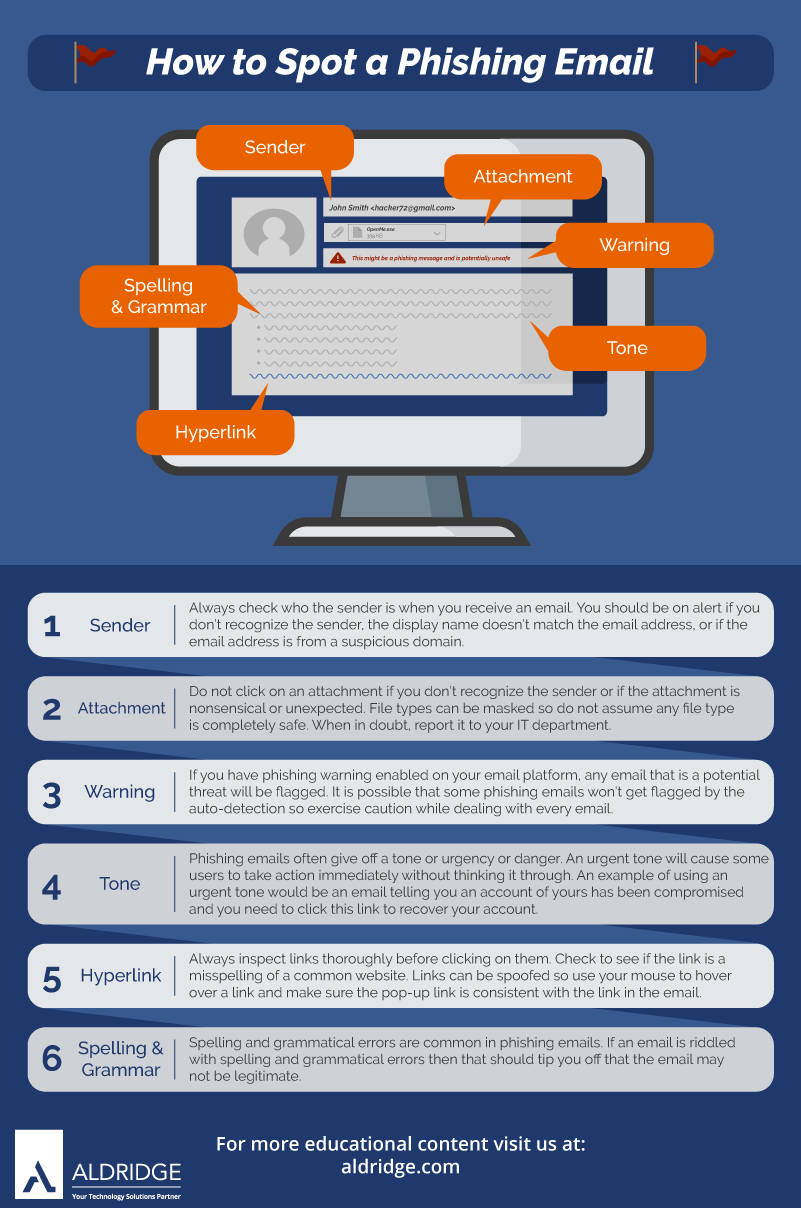
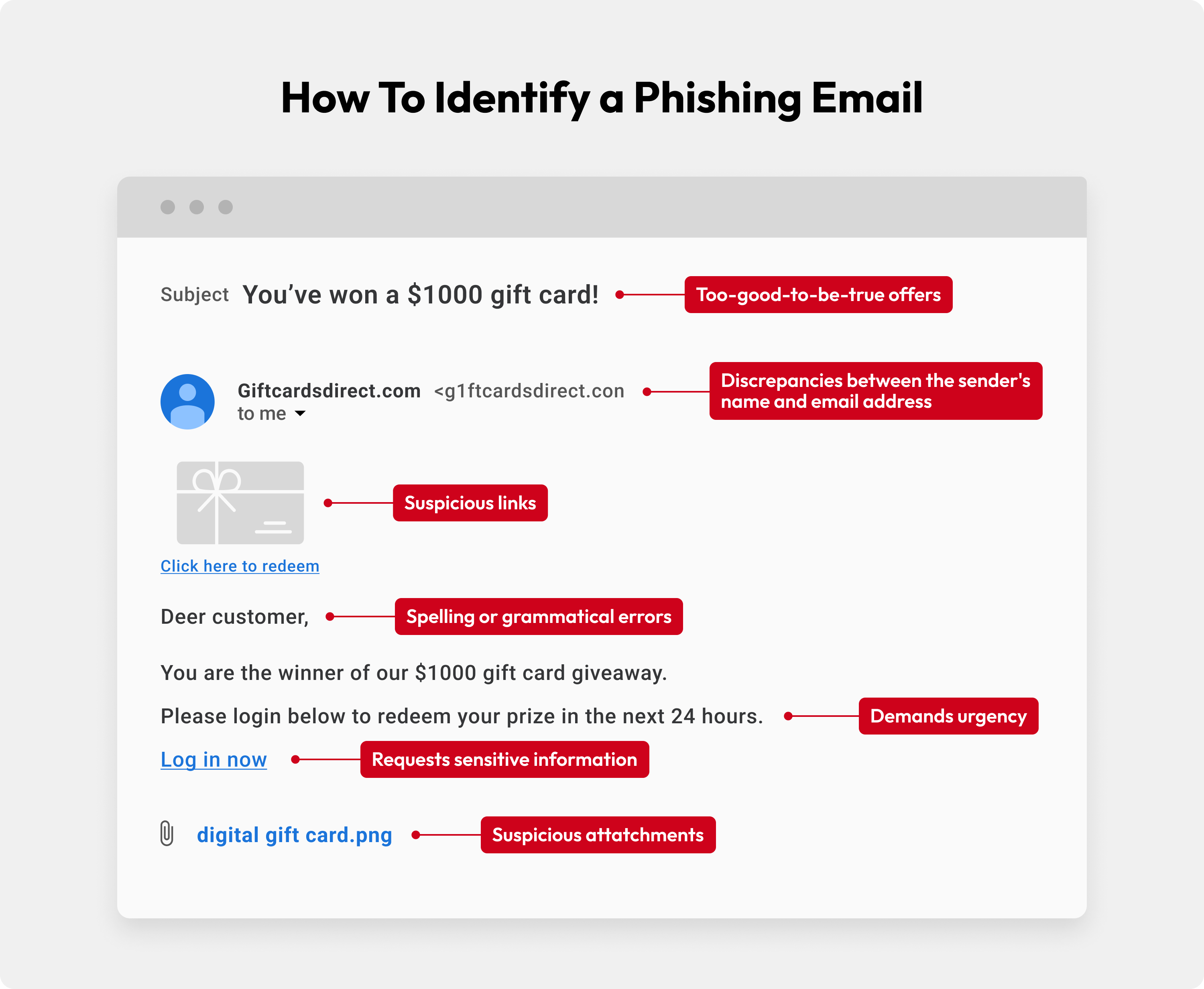
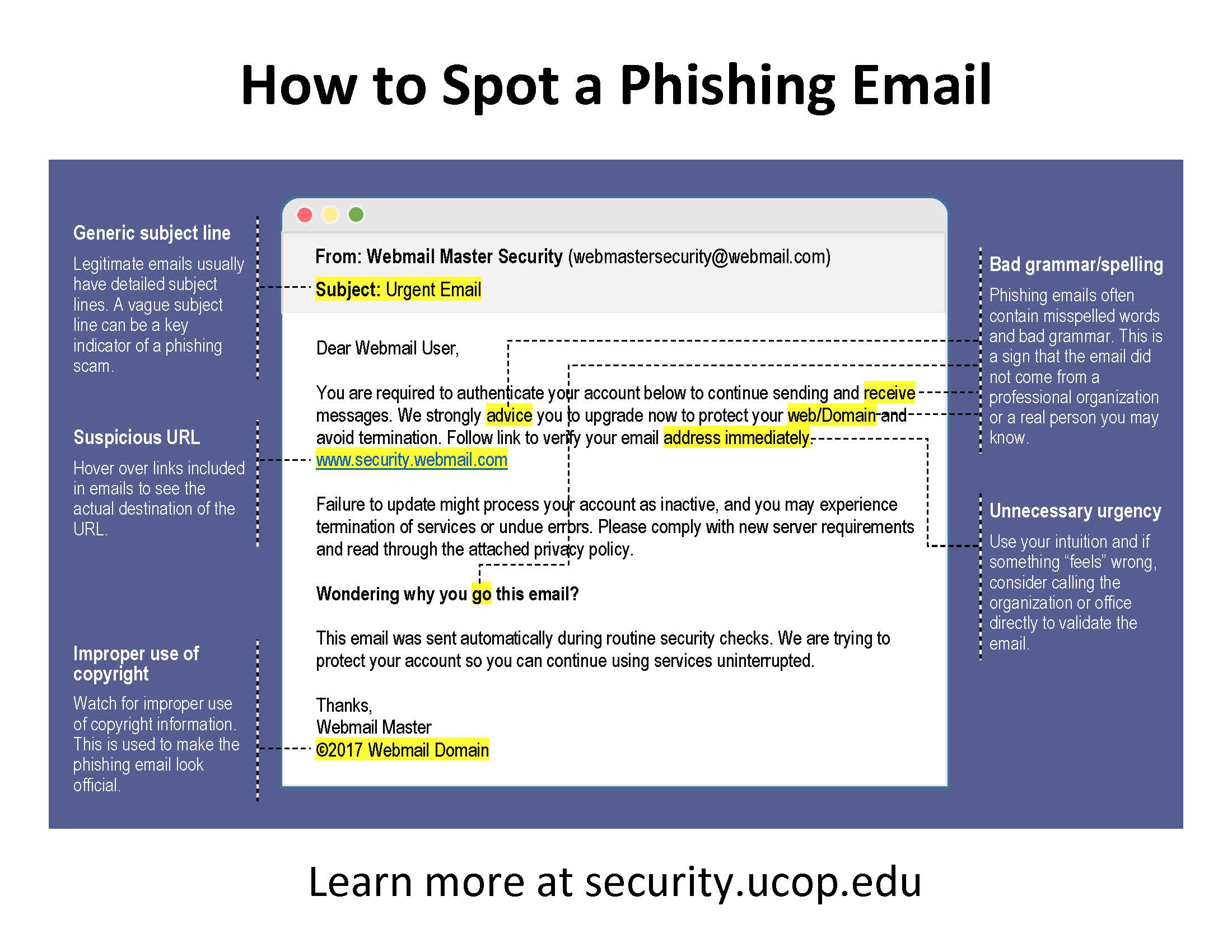
Phishing emails often exploit inconsistencies in visual and textual cues that legitimate senders rarely use. Below is a comparative table outlining key structural differences:
| Component | Legitimate Email | Phishing Email | Red Flags |
|---|---|---|---|
| Subject Line | Clear, concise, and relevant (e.g., "Your Order #12345 Confirmation"). | Vague, urgent, or overly curious (e.g., "URGENT: Verify Your Account" or "You’ve Won a $1,000 Gift Card!"). | Use of ALL CAPS, excessive exclamation marks, or personalization errors (e.g., "Dear User" instead of a name). |
| Sender Address | Matches the domain of the organization (e.g., support@amazon.com). | Lookalike domains with typos or subdomains (e.g., or ). | Mismatched domains, free email services (Gmail, Yahoo) posing as businesses, or unusual TLDs (e.g., .xyz, .top). |
| Greeting | Personalized (e.g., "Dear [First Name]" or "Hi [Recipient Name]"). | Generic or overly formal (e.g., "Dear Valued Customer" or "Hello User" in a company-specific email). | Lack of personalization in emails that should know the recipient’s name. |
| Body Content | Professional tone, proper grammar, and consistent branding. | Poor grammar, urgent demands, or inconsistent formatting (e.g., mismatched fonts, logos). | Spelling errors, broken links, or sudden shifts in tone (e.g., "Your account is suspended—click here to appeal!"). |
| Links and Attachments | Links point to verified domains (e.g., amazon.com/account). | Links disguise malicious URLs (e.g., amazon-security-verify.com). | Hovering over links reveals mismatched URLs; attachments with unexpected file types (e.g., .exe, .zip). |
| Call to Action (CTA) | Clear, non-urgent instructions (e.g., "Review your order details" without time pressure). | Immediate action required (e.g., "Click now to avoid suspension!" or "Reply with your password"). | Threats of consequences (e.g., legal action, account closure) or rewards for compliance. |
Deceptive Subject Lines: Exploiting Urgency and Curiosity
Phishing emails frequently employ subject lines designed to provoke emotional responses, overriding logical evaluation. Below are examples of highly effective yet generic phishing subject lines, categorized by their psychological triggers:
"The average user takes 15 seconds to decide whether to open an email—phishers exploit this window with emotionally charged language." — Cybersecurity Insiders (2023)
- Urgency-Based:
- "Your Account Has Been Locked – Act Now"
- "Immediate Action Required: Payment Failed"
- "Security Alert: Suspicious Login Detected" Tactic: Creates fear of immediate consequences, reducing time for verification.
- Curiosity/Gain-Framed:
- "You’re a Winner! Claim Your $500 Prize"
- "Exclusive Offer: 50% Off – Limited Time"
- "Someone Viewed Your Profile – Check Now" Tactic: Leverages the desire for rewards or social validation to bypass skepticism.
- Authority/Legitimacy:
- "IRS: Tax Document Attached – Verify Immediately"
- "Bank of America: Mandatory Update Required"
- "Microsoft: Your License Expires Tomorrow" Tactic: Impersonates official entities to exploit trust in institutional communication.
- Personalization Errors:
- "John, Your Amazon Order is on Hold"
- "Your PayPal Invoice #4567 – Review Attached" Tactic: Uses a name but lacks context, making the email seem vaguely legitimate.
Verifying Sender Email Addresses: Domain and Subdomain Analysis
The sender
Analyzing Email Content and Red Flags
Phishing emails rely heavily on psychological manipulation and visual deception to trick recipients into revealing sensitive information or installing malware. Understanding the linguistic and structural tactics used in these emails is critical for identifying fraudulent attempts. Below is a detailed breakdown of how phishing emails exploit urgency, fear, and curiosity, along with visual and textual cues that distinguish them from legitimate communications.
Linguistic Tactics in Phishing Emails
Phishing emails often employ manipulative language to create a sense of urgency, fear, or false reward. These tactics exploit cognitive biases, making recipients act without careful consideration. Below are common linguistic patterns, along with examples for each category:
Excessive Urgency Phishers use time-sensitive language to pressure recipients into immediate action, reducing their ability to think critically. Examples include: - "Your account will be suspended in 24 hours if you do not verify your details immediately." - "Limited-time offer: Claim your bonus before it expires today!" - "Due to a system upgrade, all users must update their passwords by EOD." - "Your payment is overdue—respond within 1 hour to avoid service termination." - "Security alert: Your transaction requires verification now to prevent fraud."
Threats and Fear-Based Messaging Fear is a powerful motivator, and phishing emails frequently exploit it by threatening severe consequences. Examples include: - "Unauthorized login detected! Your account will be locked permanently if you don’t act now." - "Legal action will be taken if you fail to provide the requested documents." - "Your bank account has been flagged for suspicious activity—reply with your credentials to resolve." - "Failure to comply with this request may result in criminal charges." - "Your email has been compromised; delete all stored passwords immediately."
Exaggerated Rewards or Gains Phishers lure victims with promises of unrealistic rewards, such as financial bonuses, prizes, or exclusive access. Examples include: - "You’ve won a $1,000 Amazon gift card! Click here to claim your prize." - "Exclusive offer: Double your PayPal balance with this one-time verification." - "Your tax refund has been approved—download the attachment for details." - "Free iPhone giveaway: Share your personal details to enter the contest." - "Unclaimed inheritance alert: Verify your identity to receive your funds."
Comparing Legitimate vs. Phishing Communication Styles
Legitimate organizations, such as banks, government agencies, and payment processors, maintain consistent communication styles that prioritize clarity, professionalism, and security. Phishing emails, however, often deviate from these norms. Below are examples of how genuine communications differ from phishing attempts:
Legitimate Corporate Communication (e.g., Bank of America): *"Dear Valued Customer, We noticed a recent login attempt from an unrecognized device. For your security, please verify your identity by logging into your account [here](#). If you did not initiate this login, contact us immediately at 1-800-XXX-XXXX. Thank you for your attention to security. Best regards, Bank of America Security Team"*
Phishing Attempt (Impersonating Bank of America): *"URGENT: YOUR ACCOUNT HAS BEEN HACKED! Dear Customer, We detected unauthorized transactions in your account. To secure your funds, click the link below and enter your username and password immediately: [http://fake-bank-login.com](#). Failure to act now will result in permanent account suspension! —Bank of America Fraud Prevention Team"*
Key differences include: - Tone: Legitimate emails use polite, professional language, while phishing emails are aggressive or overly casual. - Action Requests: Genuine emails direct users to official portals or provide phone numbers for verification, whereas phishing emails demand immediate clicks or downloads. - Personalization: Legitimate emails address recipients by name or account details, while phishing emails may use generic greetings or incorrect names. - Security Warnings: Official alerts include multiple verification steps (e.g., phone calls, secure portals), whereas phishing emails simplify the process to a single click.
Visual Cues and Formatting Irregularities
Phishing emails often contain visual inconsistencies that betray their fraudulent nature. Below is a table outlining common red flags, their descriptions, and examples:
| Visual Cue | Description | Example |
|---|---|---|
| Poor Grammar and Spelling | Legitimate organizations proofread emails, while phishers often include typos, awkward phrasing, or non-native grammar. | "Plz update your acct detials befor 5pm to avoid suspention." "You are a winner of a $5000 prize! Congratulations!" |
| Inconsistent Formatting | Mismatched fonts, misaligned text, or abrupt changes in styling suggest a poorly designed template. | A logo placed in the middle of the email body instead of the header. Bullet points that suddenly shift from one style to another. |
| Mismatched Logos or Branding | Phishing emails may use low-resolution logos, incorrect colors, or slightly altered brand names. | A PayPal logo with a blurry or pixelated appearance. A "Microsoft" email with a logo that uses a different font or color scheme. |
| Generic or Missing Contact Information | Legitimate emails include official contact details (e.g., phone numbers, addresses), while phishing emails may lack them or provide vague alternatives. | "Contact us at support@fake-service.com" (instead of PayPal’s official support email). No physical address or customer service phone number. |
| Overly Complex or Unusual Layouts | Phishing emails may use excessive tables, nested buttons, or unusual spacing to bypass email client filters. | A login form embedded directly in the email body rather than linked to a secure portal. Multiple layers of nested tables creating a disjointed appearance. |
Mimicking Trusted Brands Through Visual Deception
Phishing emails often replicate the colors, fonts, and layouts of trusted brands to appear authentic. Techniques to identify these fakes include:
- Hovering Over Logos: Legitimate logos link to the official website (e.g., `https://www.paypal.com`), while phishing logos may redirect to suspicious domains (e.g., `http://paypa1-login[.]com`). - Checking URL Structures: Official websites use consistent subdomains (e.g., `login.microsoftonline.com`), whereas phishing sites may use misspellings (e.g., `micr0soft-login[.]net`). - Examining Font and Color Schemes: Trusted brands maintain specific typography and color palettes. Phishing emails may use similar but slightly altered versions (e.g., a slightly different shade of blue). - Analyzing Email Headers: The "From" address may appear legitimate (e.g., `no-reply@amazon.com`), but the underlying email address (visible in headers) could be a free email provider (e.g., `amaz0n-alerts@outlook.com`).
To verify authenticity: 1. Hover over the logo or brand name without clicking to check the linked URL. 2. Compare the URL structure with the official website (e.g., PayPal’s real site uses `https://www.paypal.com`). 3. Use browser extensions like LinkScanner or VirusTotal to scan suspicious links (discussed in the next section).
Evaluating Hyperlinks and URL Patterns
Hyperlinks in phishing emails are designed to deceive users into visiting malicious websites. Key tactics include: - Shortened Links: Services like Bit.ly or TinyURL obscure the true destination. Always expand shortened links using tools like CheckShortURL. - Misspellings or Typosquatting: URLs may replace letters with numbers or symbols (e.g., `go0gle.com` instead of `google.com`). - Subdomains or Lookalike Domains: Phishers create subdomains (e.g., `login.security-paypal.com`) or use similar-sounding domains (e.g., `paypa1.com`). - HTTPS Without a Padlock: Some phishing sites use HTTPS but lack the green padlock icon, indicating an invalid or self-signed certificate.
Suspicious URL Patterns: - `http://` (instead of `https://`) – Unencrypted connections are risky. - IP addresses (e.g., `http://1
Examining Attachments and Requests for Action in Phishing Emails
Phishing emails often exploit psychological triggers and technical vulnerabilities to manipulate recipients into taking dangerous actions. One of the most common tactics involves attachments and urgent requests for action, designed to bypass security protocols and compromise sensitive data. Attackers leverage file extensions, fake software updates, and fabricated emergencies to create a false sense of urgency. Understanding how these mechanisms work—and how to counteract them—is critical for maintaining cybersecurity hygiene. Below, we dissect the risks of email attachments, the manipulation behind fake software downloads, and the pretexts used to extract sensitive information, along with actionable steps to respond safely.
Risks of Email Attachments in Phishing Scams
Email attachments serve as a primary vector for delivering malware, ransomware, and keyloggers, which can infiltrate systems undetected. Attackers exploit file extensions to bypass security filters, often disguising malicious payloads as innocuous documents. For instance, a `.zip` file may contain an executable (`.exe`) or a JavaScript file (`.js`), which, when opened, can install malware silently. Common risky file extensions include: - Executable files: `.exe`, `.bat`, `.cmd` (directly run malicious code). - Script files: `.js`, `.vbs`, `.ps1` (execute scripts that compromise systems). - Archive files: `.zip`, `.rar`, `.7z` (may contain nested malicious files). - Macro-enabled documents: `.docm`, `.xlsm` (trigger malicious macros in Microsoft Office). - PDFs with embedded scripts: `.pdf` (can execute JavaScript or exploit vulnerabilities).
Below is a comparative table outlining safe versus risky file types and how attackers exploit them:
| File Type | Extension | Safe Usage | Phishing Exploitation Method | Risk Level |
|---|---|---|---|---|
| Text Documents | .txt, .pdf (static) | Read-only content, no executable code. | Rarely malicious unless embedded with scripts (e.g., malicious PDFs). | Low |
| Image Files | .jpg, .png, .gif | Visual content only, no embedded threats. | Used as decoys in multi-stage attacks (e.g., "Open this image to view details"). | Low (unless part of a larger attack) |
| Executable Files | .exe, .bat, .cmd | Legitimate software installations (verified sources). | Directly installs malware, ransomware, or keyloggers. | Critical |
| Script Files | .js, .vbs, .ps1 | Automation tools in controlled environments. | Executes arbitrary code, often stealing credentials or encrypting files. | Critical |
| Archive Files | .zip, .rar, .7z | Compressed legitimate files (e.g., software installers). | Contains nested executables or malicious scripts (e.g., "Invoice.zip" with a hidden `.exe`). | High |
| Office Documents with Macros | .docm, .xlsm | Enabled macros for legitimate automation (e.g., templates). | Macros execute malware when opened (e.g., "Enable macros to view invoice"). | High |
Attackers often exploit file extension spoofing, where a file appears harmless (e.g., `resume.doc.zip`) but contains a malicious payload. For example, a `.pdf` might appear legitimate but embed a hidden JavaScript exploit. Always verify the file type by checking the actual extension (not just the icon) and the sender’s credibility.
Manipulation Through Fake Software Updates and Downloads
Phishing emails frequently impersonate official notifications to trick recipients into downloading malicious software or plugins. A common pretext is:
"Your account has been locked due to suspicious activity. Download this security tool to unlock it immediately."
This tactic preys on urgency and fear, mimicking alerts from platforms like banks, social media, or software providers. Legitimate software updates, in contrast, are typically: - Initiated by the user (not pushed via email). - Hosted on official websites (e.g., `apple.com`, `microsoft.com`). - Verified via digital signatures (check the publisher in file properties). - Distributed through trusted app stores (e.g., Google Play, Microsoft Store).
Attackers may also use typosquatting, where fake update links (e.g., `paypa1.com` instead of `paypal.com`) redirect users to malicious sites. To counter this: 1. Never download software from unsolicited emails, even if the email appears to be from a trusted source. 2. Manually navigate to the official website and verify the update’s legitimacy. 3. Use multi-factor authentication (MFA) to prevent unauthorized access, even if credentials are compromised.
Safely Handling Attachments and Verifying Requests
Before opening any attachment, follow these steps to mitigate risks: - Scan with antivirus software: Use tools like Windows Defender, Malwarebytes, or ClamAV to detect threats. - Open in a sandbox environment: Tools like Cuckoo Sandbox or VirtualBox isolate files to observe behavior without risking the host system. - Verify the request via official channels: Contact the sender directly (using a verified contact method) to confirm the attachment’s legitimacy. - Check file properties: Right-click the file > Properties to inspect the publisher, digital signature, and file path for anomalies. - Disable macros in Office documents: Open files in Protected View and manually enable macros only if trusted.
For emails requesting sensitive information (e.g., passwords, credit card numbers), attackers use pretexts like:
"Your subscription expires soon. Provide your payment details to avoid service interruption." "We detected unauthorized login attempts. Verify your account by entering your SSN here."
Below is a table of common pretexts and red flags:
| Pretext | Example Phrasing | Red Flags | Legitimate Alternative |
|---|---|---|---|
| Account Suspension | "Your account is locked. Download this tool to unlock it." | Unsolicited downloads, no login required. | Official login page with MFA prompts. |
| Payment/Subscription Renewal | "Update your credit card to avoid cancellation." | Links to fake payment portals, urgent tone. | Email from verified service with clear cancellation policy. |
| Tax or Legal Notification | "You owe unpaid taxes. Click here to pay now." | Threats of legal action, spoofed government logos. | Official letters via postal mail or secure portals. |
| IT Support Request | "Your computer is infected. Download this antivirus tool." | Unsolicited tech support, generic greetings. | Direct communication from known IT department. |
| HR or Employment Verification | "Verify your employment status by submitting W-9 details." | Requests for sensitive data via email. | Secure HR portals or in-person verification. |
If you encounter a suspicious request, respond with a polite but firm rejection and report it. Example
Leveraging Technology and Tools for Verification in Phishing Detection
Email authentication protocols and advanced verification tools serve as critical barriers against phishing attacks, enabling recipients to validate the legitimacy of incoming messages before taking action. While human vigilance remains essential, integrating technology into email security workflows significantly reduces the risk of falling victim to deceptive schemes. These tools range from built-in platform indicators to third-party solutions, each offering distinct layers of protection tailored to different user needs.
Email Authentication Protocols and Verification Methods
Email authentication protocols like SPF (Sender Policy Framework), DKIM (DomainKeys Identified Mail), and DMARC (Domain-based Message Authentication, Reporting, and Conformance) work collaboratively to verify the authenticity of email senders. SPF defines which mail servers are authorized to send emails on behalf of a domain, while DKIM adds a digital signature to emails to ensure they haven’t been altered in transit. DMARC builds on these protocols by specifying how receiving servers should handle emails that fail SPF or DKIM checks, often by quarantining or rejecting them.
Recipients can check if an email is properly authenticated using online tools. For example, MXToolbox and Google Admin Toolbox allow users to input an email header and analyze its authentication status. A properly authenticated email will display SPF: Pass, DKIM: Pass, and DMARC: Pass in the results. If any of these fail, the email may be spoofed. To verify using MXToolbox: 1. Copy the full email header (visible in most email clients under "Show Original" or "View Message Source"). 2. Paste it into MXToolbox’s Email Header Analyzer (mxtoolbox.com/EmailHeaders.aspx). 3. Review the Authentication Results section for SPF, DKIM, and DMARC statuses. 4. Look for red flags such as SPF: Neutral (indicating no SPF record exists) or DKIM: Fail, which suggest potential phishing attempts.
Platform-Specific Email Security Indicators
Modern email platforms like Gmail and Microsoft Outlook incorporate visual and textual cues to highlight suspicious emails. In Gmail, emails from external senders (not part of the user’s organization) are labeled "External Email" and may include a warning banner stating "This message wasn’t sent by someone in your organization." Additionally, Gmail displays a security warning (e.g., "This message might not be safe") if the email fails authentication checks or contains malicious links. Outlook, on the other hand, uses "Via" indicators to show the original sender’s domain and provides sender verification badges (e.g., a checkmark or shield icon) for verified accounts.
To maximize these features: - Enable Gmail’s "Show External Email" setting under Settings > See All Settings > Account and Import > Other Google Account Settings > Receiving Mail from Other Accounts. - In Outlook, ensure "Message Header" is enabled in the View tab to inspect email metadata. - Pay attention to sender domain mismatches—legitimate emails from companies like PayPal or banks will always display the correct domain (e.g., `@paypal.com`), not a lookalike like `@paypa1.com`.
Browser-Based Phishing Detection Tools
For users who encounter suspicious links or websites, browser-based tools like PhishTank and URLVoid provide real-time analysis of phishing risks. PhishTank (phishtank.com) allows users to submit suspicious URLs for blacklisting and check if a site has been reported as phishing. URLVoid (urlvoid.com) aggregates data from multiple blacklists (e.g., Google Safe Browsing, PhishTank) to assess a URL’s safety. To use these tools: 1. Hover over a suspicious link in an email to reveal its URL. 2. Paste the URL into PhishTank or URLVoid to check its status. 3. If the site is flagged as malicious, avoid clicking the link and report it to the platform. 4. For PhishTank, users can also submit new phishing sites by clicking "Submit URL" and providing details like the phishing method used (e.g., fake login page).
These tools are particularly useful for identifying typosquatting (e.g., `amazon-secure-login.com` instead of `amazon.com`) or homograph attacks (e.g., using Cyrillic characters to mimic Latin letters, like `рayраl.com` for `paypal.com`).
Comparison of Free and Paid Email Security Tools
While free tools offer basic protection, paid solutions provide advanced features such as real-time scanning, attachment analysis, and phishing simulations. Below is a comparison of popular options:
| Tool | Type | Key Features | Pros | Cons | Ideal Use Case |
|---|---|---|---|---|---|
| Bitdefender Total Security | Paid | Real-time email scanning, anti-phishing filters, sandboxing for attachments | High detection rate, user-friendly interface | Subscription cost, resource-intensive | Individuals and SMBs needing robust protection |
| Norton 360 Deluxe | Paid | Dark web monitoring, secure VPN, phishing URL blocking | Comprehensive security suite, multi-device support | Expensive, occasional false positives | Users requiring identity theft protection |
| Mimecast | Paid | Impersonation detection, automated threat response, email continuity | Enterprise-grade security, AI-driven analysis | High cost, complex setup | Large organizations with IT teams |
| Virustotal | Free/Paid | Free URL and attachment scanning, paid API for advanced analysis | Access to global threat intelligence | Free version limited to basic checks | Security researchers, IT professionals |
| MailGuard | Paid | AI-powered phishing detection, automated quarantine, customizable policies | Low false positives, integrates with Microsoft 365 | Pricing based on user count | Businesses using Microsoft or Google Workspace |
Free alternatives like Virustotal and Google’s Safe Browsing (accessible via transparencyreport.google.com/safe-browsing) are suitable for casual users, while paid tools like Mimecast or Bitdefender cater to organizations requiring granular control over email security.
Enhanced Protection with VPNs and Secure Email Services
Virtual Private Networks (VPNs) and secure email services add an extra layer of defense by encrypting communications and obscuring IP addresses. VPNs like NordVPN or ProtonVPN prevent ISP-level snooping and mitigate risks from public Wi-Fi networks, where phishing attacks often originate. However, VPNs do not directly protect against phishing emails themselves; they primarily safeguard data in transit.
Secure email services such as ProtonMail and Tutanota offer end-to-end encryption, ensuring only the intended recipient can read the message. These services are particularly useful for: - Users handling sensitive information (e.g., lawyers, journalists). - Individuals concerned about government surveillance or corporate espionage.
Limitations include: - ProtonMail does not support third-party email integration (e.g., sending encrypted emails to Gmail users without a ProtonMail account). - Tutanota has a smaller user base, limiting its effectiveness in collaborative environments. - Neither service prevents phishing emails from reaching the inbox; they only secure the content of legitimate messages.
For maximum protection, combine these tools with multi-factor authentication (MFA) and regular security awareness training to mitigate human error.
Psychological Triggers and Social Engineering Tactics in Phishing Emails
Phishing attacks exploit deep-seated psychological vulnerabilities and sophisticated social engineering techniques to manipulate recipients into disclosing sensitive information or performing unauthorized actions. Attackers carefully craft messages to trigger emotional responses—such as fear, urgency, or curiosity—while leveraging trust, authority, and personalization to bypass skepticism. Understanding these tactics is critical for recognizing deception and adopting proactive defenses against increasingly convincing fraud schemes.
Social engineering relies on human psychology to override rational decision-making. Phishers craft narratives that align with common behavioral patterns, such as the need for belonging, fear of loss, or desire for recognition. For instance, an email claiming a "limited-time discount" exploits the scarcity principle, while a message about "account suspension" triggers fear of exclusion or financial penalties. These triggers are often combined with impersonation, where attackers mimic trusted entities—such as colleagues, banks, or government agencies—to lend credibility to their requests.
Common Psychological Triggers in Phishing Emails
Phishing emails frequently deploy specific psychological triggers to coerce recipients into immediate action. These triggers exploit cognitive biases and emotional vulnerabilities, making it harder to think critically. Below are the most prevalent triggers and how they manifest in malicious communications:
"Your account will be locked in 24 hours unless you verify your details immediately."
"Only 3 seats remain for our exclusive webinar—claim yours before it’s too late!"
"As per the CEO’s directive, all employees must update their credentials by EOD."
Attackers use fear-based tactics to create panic, such as threats of account termination, legal action, or financial loss. Scarcity and exclusivity manipulate recipients into believing they risk missing out on a valuable opportunity, while authority leverages perceived legitimacy from figures of power (e.g., CEOs, law enforcement, or IT administrators). Personalization, such as addressing the recipient by name or referencing past interactions, further enhances the illusion of authenticity.
Impersonation Attacks and AI-Generated Deception
Impersonation remains one of the most effective social engineering tactics, with attackers mimicking trusted contacts, brands, or even voices. Email spoofing allows fraudsters to forge sender addresses, making messages appear to originate from colleagues, managers, or service providers. For example, an email from "support@paypal.com" might look identical to a legitimate PayPal message, complete with logos and branding.
Voice phishing (vishing) takes impersonation further by using AI-generated voices to replicate trusted figures. Attackers may call victims pretending to be IT support, bank representatives, or family members in distress. AI tools can now mimic accents, tones, and even speech patterns with high fidelity, making verification challenging. To detect such attacks:
- Verify sender details: Hover over email addresses or check phone numbers against known contacts. Use tools like MXToolbox to validate domain authenticity.
- Cross-check requests: Contact the purported sender through a verified channel (e.g., a known phone number or official website) before acting.
- Listen for inconsistencies: In vishing calls, note discrepancies in speech patterns, background noise, or reluctance to provide clear identification.
- Use email authentication tools: Check for DMARC, SPF, and DKIM records to confirm email legitimacy.
AI-generated messages, such as deepfake videos or chatbot responses, are increasingly used in phishing. These messages may contain personalized details (e.g., past purchases or internal company jargon) to appear genuine. Recipients should treat unsolicited messages—even those with personal information—as suspicious until verified.
False Urgency and Exclusivity in Phishing Communications
Phishing emails often create a false sense of urgency or exclusivity to prevent recipients from thinking critically. Phrases like "Act now!" or "This offer expires today!" exploit the hyperbolic discounting bias, where people prioritize immediate rewards over long-term security. Below is a table of common urgency-inducing phrases and counterarguments to maintain composure:
| Urgency-Inducing Phrase | Counterargument |
|---|---|
"Your account will be suspended in 24 hours if you don’t act immediately." |
Legitimate organizations provide clear timelines and multiple verification steps. Contact the company directly using official channels to confirm. |
"Only 5 users can access this discount—claim yours before it’s gone!" |
Scarcity is often a marketing tactic. Verify the offer’s legitimacy by checking the sender’s domain and cross-referencing with the company’s official website. |
"The CEO has mandated an urgent password reset for all employees." |
CEOs rarely send unsolicited emails for sensitive actions. Request verification through a separate, secure channel (e.g., a verified phone call or in-person confirmation). |
"We’ve detected fraudulent activity—verify your identity now to secure your funds." |
Banks and financial institutions never demand immediate action via email. Log in to your account independently or call the official customer service line. |
To counteract these tactics, adopt a "pause-and-verify" approach: 1. Pause: Do not click links or respond immediately. Step away from the email for at least 10 minutes. 2. Verify: Use independent channels (e.g., official websites, known phone numbers) to confirm the request. 3. Seek alternatives: If unsure, consult IT security teams or colleagues before proceeding.
Pretexting and Fabricated Scenarios in Phishing Attacks
Pretexting involves attackers creating a fabricated scenario to gain trust and extract information. For example, a phisher might pose as an IT administrator investigating "suspicious login attempts" or a "data breach" to coerce a victim into revealing credentials. Real-world examples include:
- Technical support pretext: "We’ve detected malware on your device. Download this tool to remove it immediately." (The "tool" is malware.)
- Legal or compliance pretext: "As part of our annual audit, we require your login credentials to verify compliance." (No legitimate audit requests credentials via email.)
- Personal emergency pretext: "Hi [Name], this is [Colleague]—I’m in a bind and need you to transfer funds urgently." (The email is spoofed, and the colleague is compromised.)
Attackers often combine pretexting with spear phishing, tailoring messages to the recipient’s role or past behaviors. For instance, a phisher might reference a recent project or internal discussion to appear knowledgeable. To defend against pretexting:
- Question the context: Ask why the request is necessary and how it aligns with standard procedures.
- Request written confirmation: Legitimate requests are rarely made via email alone. Demand follow-up through official channels.
- Report inconsistencies: If a colleague’s email or behavior seems off, verify their identity independently.
Building Skepticism as a Defensive Habit
Developing a habit of skepticism is the most effective long-term defense against phishing. Mindfulness exercises and role-playing scenarios can train the brain to recognize manipulation tactics before they succeed. Below are techniques to cultivate healthy skepticism:
- Mindfulness pauses: Before opening an email, ask:
- Is this message unexpected or out of the ordinary?
- Does it create emotional pressure (fear, urgency, guilt)?
- Is the sender’s email address or phone number familiar?
- Role-playing drills: Simulate phishing scenarios with colleagues or family. For example:
- Practice responding to a fake "account suspension" email by verifying the request.
- Role-play a vishing call where an attacker pretends to be IT support.
- Real-World Case Studies and Common Scenarios in Phishing Attacks
Phishing attacks evolve alongside technological advancements, leveraging psychological manipulation, industry-specific vulnerabilities, and seasonal triggers to deceive victims. Real-world examples reveal how scammers exploit urgency, authority, and emotional triggers to bypass security protocols. Understanding these patterns—from impersonated brands to tailored industry scams—equips individuals and organizations with actionable insights to detect and mitigate threats. This section dissects high-profile phishing campaigns, industry-specific risks, and seasonal exploitation tactics, alongside investigative steps for financial verification and organizational preparedness.
Analysis of High-Impact Phishing Email Campaigns
Phishing emails often mimic legitimate communication from trusted entities to exploit trust. Below is a breakdown of five real-world examples, categorized by subject, red flags, objectives, and detection methods. These cases highlight recurring tactics used across industries.Subject Red Flags Goal How to Spot It "Urgent: IRS Notice – Tax Refund Delayed" - Sender address: "irs-notifications@secure-tax.gov" (spoofed domain).
- Threats of legal action ("Failure to respond may result in penalties").
- Generic greeting ("Dear Taxpayer") instead of personalized salutation.
- Hyperlinks to fake IRS portals (e.g., "irs-refund-update[.]com").
Steal login credentials or deploy malware via malicious attachments. - Verify official IRS communications via irs.gov or call the IRS directly at 1-800-829-1040.
- Check for HTTPS in the URL and hover over links to reveal true destinations.
- Never enter credentials on unexpected portals.
"Your PayPal Invoice #PP-123456789 is Pending" - Sender: "no-reply@paypal-invoice[.]com" (misspelled domain).
- Attachments labeled "Invoice_Attachment.pdf" (often malicious).
- Sense of urgency: "Action required within 24 hours."
- Fake PayPal logo with slight pixelation or color mismatches.
Distribute ransomware or harvest financial data. - Log in to PayPal independently and navigate to "Activity" to verify invoices.
- Use PayPal’s official app for secure transactions.
- Scan attachments with tools like VirusTotal before opening.
"Your Amazon Order #A1B2C3D4E5 is Delayed" - Sender: "amazon-order@support[.]amazon[.]co" (look-alike domain).
- Fake tracking link redirecting to a survey or malware site.
- Holiday-themed subject lines (e.g., "Black Friday Special").
- Poor grammar: "Due to unexpected demand, your shipment has been postponed."
Phish for credit card details or deploy spyware. - Check order status via Amazon’s official website or app.
- Look for Amazon’s verified badge on emails.
- Report phishing attempts via Amazon’s phishing reporting page.
"Job Offer: Remote IT Support – $75/hr" - Sender: "hr@company[.]jobs" (free email service like Gmail or Outlook).
- Vague company details (e.g., "We are a growing tech firm").
- Request for upfront payment ("Processing fee of $99 for onboarding").
- Poorly designed "contract" with generic templates.
Extort money or recruit money mules for fraud. - Reverse-image search the company logo to verify legitimacy.
- Check job listings on LinkedIn or Glassdoor.
- Avoid sharing personal/financial data before in-person or verified video interviews.
"Microsoft: Your Account Has Been Compromised" - Sender: "microsoft-security@alerts[.]microsoft[.]com" (spoofed).
- Fake login page with slight UI differences (e.g., missing "Sign in" button).
- Warnings of "unusual sign-in activity from Germany."
- Attachments labeled "Security_Alert.exe" (malware).
Steal Microsoft account credentials or deploy keyloggers. - Log in to Microsoft via account.microsoft.com directly.
- Enable multi-factor authentication (MFA) immediately.
- Report phishing to Microsoft via their phishing reporting tool.
Industry-Specific Phishing Targets and Mitigation Strategies
Phishing attacks are often tailored to exploit industry-specific workflows, hierarchies, and data sensitivities. Below are common professions and sectors frequently targeted, along with customized detection advice.Phishing success rates in healthcare reached 25% in 2022, with ransomware attacks doubling due to exploited HIPAA vulnerabilities (IBM Security, 2023).
-
Healthcare Professionals
Scammers impersonate patients, insurers, or hospital admins to request urgent medical record changes or payment for "unauthorized services." Red flags include:
- Emails from free email domains (e.g., "patient_bill@outlook[.]com") claiming to be from insurance providers.
- Requests to "verify credentials" via unsecured portals.
- Attachments labeled "Patient_Records_Update.xlsx" (macro-enabled malware).
Mitigation: Cross-verify patient requests via phone or the hospital’s patient portal. Use encrypted communication tools like Secure eMessage for sensitive data.
-
Finance and Banking Employees
Attackers exploit wire transfer requests, fake "audit notices," or "CEO fraud" (where scammers impersonate executives). Common tactics include:
- Emails with urgent deadlines ("
Advanced Protective Measures and Best Practices Against Phishing Attacks
Phishing attacks continue to evolve, leveraging sophisticated tactics to bypass traditional security measures. Advanced protective strategies integrate multi-layered defenses, combining technological safeguards with proactive user training and organizational policies. By implementing robust authentication methods, fortifying email security, and maintaining up-to-date systems, individuals and organizations can significantly reduce susceptibility to phishing. This section explores actionable measures—from cutting-edge authentication techniques to enterprise-level email filtering—and outlines best practices for individuals and businesses to build an impenetrable defense.Multi-Factor Authentication (MFA) as a Phishing Mitigation Layer
Multi-factor authentication (MFA) serves as a critical barrier against credential theft, even when passwords are compromised. Unlike single-factor authentication, MFA requires users to provide two or more verification factors, drastically reducing the likelihood of unauthorized access. SMS-based MFA, while convenient, remains vulnerable to SIM-swapping attacks, where attackers hijack a victim’s phone number to intercept codes. Authenticator apps (e.g., Google Authenticator, Microsoft Authenticator) generate time-based one-time passwords (TOTP) and are less susceptible to interception, though phishing-resistant versions like FIDO2 or WebAuthn offer superior security by eliminating password reliance entirely. Biometric authentication (fingerprint, facial recognition) adds an additional layer but can be bypassed if biometric data is stolen or spoofed. Organizations should prioritize phishing-resistant MFA methods, such as hardware tokens (YubiKey) or platform-native solutions like Microsoft’s FIDO2 keys, which prevent credential harvesting entirely."MFA reduces the risk of account compromise by up to 99.9% when implemented correctly, according to Microsoft’s 2023 Identity Security Report."
Advanced Email Security Settings Across Platforms
Email providers offer granular security configurations to mitigate phishing risks. Gmail’s security settings allow users to enable 2-Step Verification (2SV), block untrusted apps via "Less Secure Apps" (now deprecated in favor of app-specific passwords), and enforce DMARC policies to prevent email spoofing. Microsoft Outlook provides Conditional Access policies to restrict sign-ins from suspicious locations and Safe Links to scan URLs in real-time. DMARC (Domain-based Message Authentication, Reporting & Conformance) is particularly effective; organizations can publish p=reject policies to automatically discard fraudulent emails impersonating their domain. For businesses, Microsoft Defender for Office 365 and Google Workspace’s Advanced Protection offer enterprise-grade email filtering, including zero-day threat detection and AI-driven anomaly analysis.Key DMARC Record Components:
- p=none: Monitor without enforcement.
- p=quarantine: Route suspicious emails to spam.
- p=reject: Block unauthorized emails outright.
Regular Software Updates and Patch Management
Phishing attacks frequently exploit unpatched vulnerabilities in operating systems, browsers, and security software. Operating system updates (e.g., Windows Update, macOS Security Updates) often include critical fixes for zero-day exploits, such as the Log4j vulnerability (CVE-2021-44228), which attackers weaponized in supply-chain phishing campaigns. Browser updates (Chrome, Firefox, Edge) patch flaws like CVE-2023-2096 (a critical Chrome zero-day) that enable malicious redirects. Antivirus and endpoint protection suites (e.g., CrowdStrike, SentinelOne) require regular updates to detect evolving phishing tactics, such as fileless malware delivered via malicious Office macros. Organizations should enforce automated patch management using tools like Windows Server Update Services (WSUS) or Jamf Pro for macOS environments, ensuring critical fixes are deployed within 24–48 hours of release.Individual Best Practices: Password Hygiene and Browser Security
Individuals remain the weakest link in phishing defenses, but adopting strong password practices can neutralize this risk. Password managers (Bitwarden, 1Password, LastPass) generate and store 12+ character, randomly complex passwords, eliminating reliance on reused credentials—a tactic exploited in credential stuffing attacks. Browser security features like Firefox’s Enhanced Tracking Protection or Chrome’s Safe Browsing block known phishing sites, while extensions like uBlock Origin filter malicious ads and trackers. Users should also: - Enable browser warnings for downloads and mixed-content scripts.
- Disable JavaScript in high-risk scenarios (e.g., opening suspicious emails).
- Use private/incognito modes to limit session hijacking risks.
- Quarterly simulated phishing tests (e.g., KnowBe4, PhishMe) to train employees.
- Gamified training modules (e.g., interactive scenarios like "Spot the Phish" challenges).
- Anonymous reporting channels for employees to flag suspicious emails without fear of repercussion.
- Personalize attacks to reflect real-world scenarios (e.g., CEO fraud).
- Measure engagement metrics (click rates, report rates) to identify training gaps.
- Provide immediate feedback with remediation resources.
"The average user has 100+ passwords, with 60% reused across sites—making them prime targets for credential harvesting (Forrester, 2023)."
Organizational Email Filtering Systems and Phishing Simulation Programs
Enterprises deploy email security gateways (Proofpoint Essentials, Cisco Secure Email) to preemptively block phishing attempts using machine learning, sandboxing, and threat intelligence feeds. These systems analyze email headers, sender reputation, and attachment behavior to flag malicious content before delivery. Proofpoint’s Targeted Attack Protection, for example, uses natural language processing (NLP) to detect socially engineered messages mimicking internal communications. Organizations should pair filtering with phishing awareness programs, including:Phishing Simulation Best Practices:
Comprehensive Phishing Defense Strategy Infographic
Below is an embeddable HTML snippet for a multi-layered phishing defense infographic, combining technology, education, and policy. The visual maps five defense pillars: 1. Authentication (MFA, FIDO2). 2. Email Security (DMARC, filtering). 3. System Hardening (patches, EDR). 4. User Training (simulations, awareness). 5. Incident Response (reporting, containment). Layered Phishing Defense Strategy 🔒 AuthenticationDeploy phishing-resistant MFA (FIDO2, hardware tokens).
- Emails with urgent deadlines ("
Leave a Comment
Comments are moderated before appearing. The data you submit is processed according to the Privacy Policy of Vetlife Archive.