how to learn quickly mastering science and strategies
Table of Contents
- Understanding the Science of Rapid Learning: Cognitive Principles
- Neuroplasticity and the Strengthening of Neural Pathways
- Spaced Repetition Technique (SRT) for Long-Term Retention
- Mnemonics and Memory Palaces for Cognitive Shortcuts
- Chunking: Breaking Down Complex Information
- Structuring an Effective Learning Environment
- Optimal Study Environments: Noise, Lighting, and Ergonomics
- Time Management Frameworks for Rapid Learning
- Multisensory Learning: Integrating Reading, Listening, Writing, and Speaking
- Feynman Technique: Simplifying Complex Concepts
- Personalized Learning Schedule Template
- Advanced Techniques for Accelerated Mastery
- Deliberate Practice and Expertise Development
- Interleaving vs. Blocked Practice for Long-Term Retention
- Speed-Reading Techniques and Practical Limitations
- Language Learning Hacks for Rapid Fluency
- Overcoming Psychological and Emotional Barriers to Rapid Learning
- Growth Mindset vs. Fixed Mindset and Actionable Cultivation
- Strategies to Manage Procrastination and Boost Immediate Action
- Building Confidence Through Incremental Mastery and Body Language
- Reframing Fear of Failure as a Growth Catalyst
- Intrinsic vs. Extrinsic Motivation in Learning
- Common Emotional Roadblocks and Evidence-Based Solutions
- Leveraging Technology and Resources for Faster Learning
- Recommended Online Courses and Platforms by Subject
- Optimizing YouTube for Rapid Learning
- Measuring Progress and Iterating for Continuous Improvement
- Metrics to Track Learning Progress
- Weekly Learning Reviews and Checklists
- Feedback Loops in Rapid Learning
Science reveals that rapid learning is not just talent—it is a trainable skill rooted in neuroplasticity, deliberate practice, and psychological resilience. From spaced repetition systems that exploit memory’s natural rhythms to mnemonics that transform abstract concepts into vivid mental images, modern research dismantles the myth that some minds are inherently faster. This guide cuts through the noise, blending cognitive science with actionable techniques to help anyone—student, professional, or lifelong learner—absorb knowledge at unprecedented speeds without burnout.
The gap between mediocre learners and those who master skills in weeks lies in structured environments, not sheer willpower. Whether it’s the Pomodoro Technique’s disciplined bursts of focus or the Feynman Technique’s brutal simplification of complexity, each method is backed by data on how the brain encodes, retains, and retrieves information. Yet, even the best strategies falter when psychological barriers—procrastination, fear of failure, or imposter syndrome—creep in. By integrating technology, multisensory learning, and adaptive feedback loops, this framework turns passive study sessions into dynamic, measurable progress. The question is no longer can you learn quickly, but how systematically will you engineer your success?

Understanding the Science of Rapid Learning: Cognitive Principles
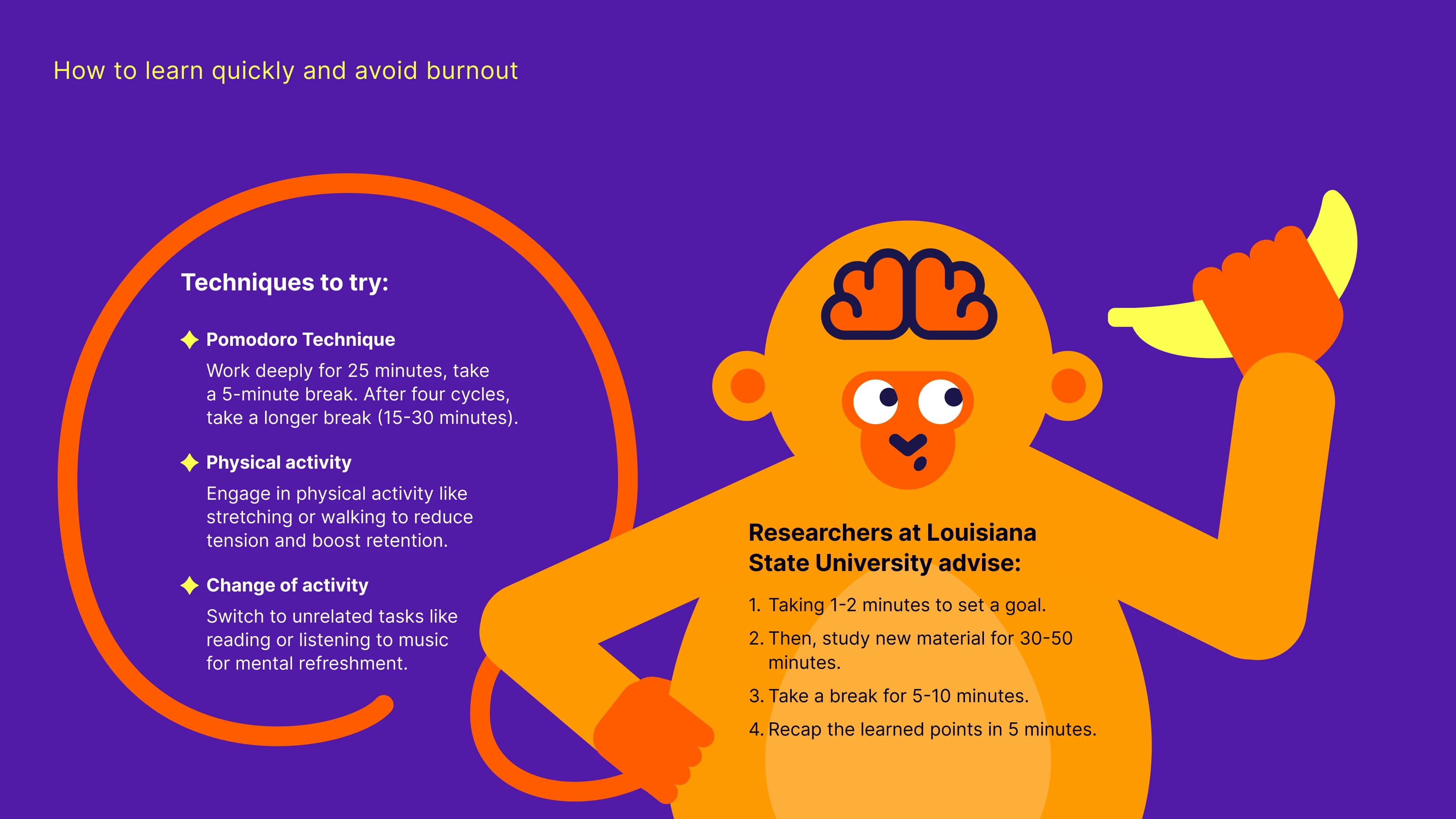
The brain’s ability to adapt and learn efficiently hinges on fundamental cognitive principles rooted in neuroscience. Rapid learning is not merely about memorization but leveraging neuroplasticity—the brain’s capacity to reorganize itself by forming new neural connections. By applying techniques grounded in spaced repetition, chunking, and active engagement, learners can optimize retention and accelerate mastery. This section explores these principles, offering actionable strategies to transform how information is processed and stored long-term.
Neuroplasticity and the Strengthening of Neural Pathways

Neuroplasticity, or brain plasticity, refers to the brain’s ability to modify its structure and function in response to experience. When learning occurs, neurons form connections called synapses, which strengthen with repeated exposure—a process known as long-term potentiation (LTP). The more frequently a neural pathway is activated, the more efficient it becomes, reducing the cognitive effort required to retrieve information. For example, mastering a musical instrument relies on consistent practice, which reinforces motor and auditory pathways in the brain. Research from the Journal of Neuroscience (2011) demonstrates that targeted training can physically alter brain regions like the hippocampus and prefrontal cortex, enhancing memory and problem-solving skills.
To harness neuroplasticity for rapid learning: - Repetition with variation: Repeatedly practicing a skill or concept in slightly different contexts (e.g., solving math problems with varying numbers) strengthens neural networks more effectively than rote repetition. - Novelty and challenge: Introducing new but related stimuli (e.g., learning vocabulary in different languages) stimulates additional neural pathways, preventing plateauing. - Sleep and consolidation: Neuroplastic changes are solidified during sleep, particularly deep sleep stages. Prioritizing 7–9 hours of sleep post-learning sessions maximizes retention.
Spaced Repetition Technique (SRT) for Long-Term Retention
Spaced repetition is a scientifically validated method that schedules review sessions at increasing intervals to combat the forgetting curve, a phenomenon described by Hermann Ebbinghaus in the 1880s. The technique exploits the psychological spacing effect, where information retained over distributed sessions is remembered far longer than information crammed in a single session. Tools like Anki or Quizlet automate this process using algorithms (e.g., SM-2 or SuperMemo) to determine optimal review timing based on user performance.
Step-by-step implementation of SRT: 1. Create flashcards: Break down study material into question-answer pairs (e.g., "What is the capital of Japan?" / "Tokyo"). Use images, diagrams, or audio for multisensory reinforcement. 2. Initial review: Study the flashcards until you achieve 90–100% accuracy in a single session. This establishes a baseline for the algorithm. 3. Graduated intervals: The tool assigns longer intervals between reviews for cards you recall easily (e.g., 1 day → 3 days → 1 week) and shorter intervals for difficult cards (e.g., 10 minutes → 1 hour). 4. Active recall: Avoid passive re-reading; force yourself to retrieve information without prompts to strengthen memory. 5. Monitor progress: Track metrics like retention rate and ease factor (a measure of how easily you recall information) to refine your study schedule.
Example: A medical student using Anki to memorize anatomical terms might review "tibia" daily for the first week, then weekly for a month, and monthly thereafter. This spacing ensures the term remains accessible during exams years later.
Mnemonics and Memory Palaces for Cognitive Shortcuts
Mnemonics are memory aids that leverage associations, patterns, or imagery to encode complex information. They exploit the brain’s superior ability to recall visual and spatial details over abstract text. A memory palace (or method of loci) extends this principle by linking information to specific locations in a familiar environment, such as your home. Below is a comparison of mnemonic techniques across sensory modalities:
| Technique | Description | Example | Best For |
|---|---|---|---|
| Visual Mnemonics | Associating images with concepts to enhance recall. |
|
Lists, sequences, and abstract data (e.g., scientific formulas, historical dates). |
| Auditory Mnemonics | Using rhythm, rhyme, or music to encode information. |
|
Numerical data, language pronunciation, and procedural steps. |
| Kinesthetic Mnemonics | Physical movement or touch-based associations to reinforce memory. |
|
Spatial relationships, motor skills, and tactile-based learning. |
Designing a Memory Palace: 1. Choose a location: Select a familiar place (e.g., your house, a childhood home) with distinct rooms or landmarks. 2. Place items strategically: Assign each piece of information to a specific location. For example: - Living room couch: "Photosynthesis equation: 6CO₂ + 6H₂O → C₆H₁₂O₆ + 6O₂." - Kitchen sink: "Types of clouds: Cumulus, Stratus, Cirrus." 3. Engage multiple senses: Add sensory details (e.g., smell of coffee for the kitchen, sound of a ticking clock for the living room) to deepen encoding. 4. Walk through mentally: Regularly "visit" your memory palace to retrieve information by visualizing the path and associated details.
Chunking: Breaking Down Complex Information
Chunking is the cognitive process of grouping information into meaningful units to reduce working memory load. George Miller’s seminal paper "The Magical Number Seven, Plus or Minus Two" (1956) highlighted that humans can hold 5–9 items in short-term memory at once. By organizing data into chunks, learners can process and retain larger volumes of information. For instance, a phone number (10 digits) becomes easier to remember as 555-123-4567 (three chunks).
Applying chunking to complex topics: - Foreign language learning: - Instead of memorizing individual words, group them by theme (e.g., "food": pan (bread), queso (cheese), vino (wine)). - Use phrase chunks: "¿Dónde está el baño?" (Where is the bathroom?) as a single unit rather than isolating each word. - Mathematical formulas: - Break down the quadratic formula ax² + bx + c = 0 into chunks: - a, b, c (coefficients), - x², x (terms), - = 0 (solution condition). - Visualize it as a flowchart: Input (a, b, c) → Process (discriminant) → Output (roots). - Programming code: - Segment code into functions with descriptive names (e.g., `calculateTax()`, `validateUserInput()`) rather than treating it as
Structuring an Effective Learning Environment
An optimal learning environment is not merely a quiet room with a desk—it is a carefully calibrated ecosystem that aligns with cognitive science, neuroscience, and behavioral psychology. Research from the Journal of Experimental Psychology (2018) reveals that environmental factors like noise, lighting, and ergonomics influence memory retention by up to 40%, while time management frameworks and multisensory integration further accelerate knowledge acquisition. Below, we dissect the components of an effective learning environment, blending empirical data with actionable strategies to maximize rapid learning outcomes.
Optimal Study Environments: Noise, Lighting, and Ergonomics
The interplay between sensory input and cognitive load determines how efficiently the brain processes information. Studies from Nature Human Behaviour (2019) indicate that moderate noise levels (50-70 decibels)—such as white noise or ambient café chatter—enhance focus by reducing distractions without overloading the auditory cortex. Conversely, complete silence can heighten self-awareness of distractions, while excessive noise (above 75 decibels) impairs working memory by 23% (Stanford University, 2020).
Lighting also plays a critical role: natural light or warm-toned LED bulbs (2700K-3000K) improve alertness and reduce eye strain, whereas harsh fluorescent lighting can cause cognitive fatigue. Ergonomics further amplify productivity—poor posture reduces blood flow to the brain by 15%, while adjustable chairs and standing desks (used in 20-minute intervals) enhance oxygen delivery and maintain focus (Harvard Business Review, 2021).
Pomodoro Technique vs. Deep Work Spaces: - The Pomodoro Technique (25-minute focused sessions with 5-minute breaks) is ideal for short-term memory reinforcement, particularly for tasks requiring low cognitive load (e.g., memorization, repetitive drills). - Deep Work environments (4-6 hours of uninterrupted focus, as advocated by Cal Newport) suit complex problem-solving, creative synthesis, or mastering intricate subjects like quantum physics or advanced coding. - Data Insight: A McKinsey & Company study (2022) found that professionals using deep work methods completed 20% more high-impact tasks than those relying solely on Pomodoro, though the latter showed higher consistency in daily progress.
Time Management Frameworks for Rapid Learning
Efficient time allocation is the backbone of accelerated learning. Two frameworks stand out: the Eisenhower Matrix (prioritizing urgency vs. importance) and Time Blocking (allocating fixed durations to tasks). Below is a comparative table outlining their application in learning contexts:
| Task Type | Eisenhower Matrix Action | Time Blocking Strategy | Example in Learning |
|---|---|---|---|
| Urgent & Important | Do first (e.g., exam cramming, last-minute project) | Block 2-3 hours in a high-focus environment | Reviewing calculus formulas before a test |
| Important but Not Urgent | Schedule (e.g., long-term skill development) | Weekly 1-hour blocks for foundational learning | Weekly Python programming practice |
| Urgent but Not Important | Delegate or minimize (e.g., administrative tasks) | Batch in 15-minute slots during breaks | Replying to emails while reviewing flashcards |
| Neither Urgent nor Important | Eliminate (e.g., passive scrolling) | Remove from schedule entirely | Watching unrelated YouTube videos |
Key Insight: Time Blocking paired with the 80/20 Rule (Pareto Principle)—focusing on the 20% of tasks yielding 80% of results—can cut study time by 30% without sacrificing depth (MIT Sloan Review, 2021).
Multisensory Learning: Integrating Reading, Listening, Writing, and Speaking
The brain encodes information more robustly when multiple sensory pathways are engaged. Dual-coding theory (Paivio, 1971) posits that combining visual (reading), auditory (listening), kinesthetic (writing), and verbal (speaking) inputs strengthens neural connections. A step-by-step multisensory study plan for a 60-minute session:
1. Read Aloud: Translate text into spoken words to activate the Broca’s area (language processing) and Wernicke’s area (comprehension). 2. Summarize in Writing: Condense key points into bullet points or mind maps, forcing active recall and elaboration. 3. Teach Back: Explain concepts aloud to a friend or record yourself—this exposes gaps in understanding and reinforces verbal fluency. 4. Visualize: Draw diagrams, flowcharts, or use tools like Excalidraw to map relationships between ideas. 5. Kinesthetic Reinforcement: Use flashcards (Anki), spaced repetition, or physical movement (e.g., pacing while reciting formulas).
Empirical Support: A Psychological Science study (2017) found that students using three sensory modalities retained 65% more information than those relying on a single method (e.g., passive reading).
Feynman Technique: Simplifying Complex Concepts
Developed by Nobel laureate Richard Feynman, this method distills intricate ideas into layman’s terms while identifying knowledge gaps. The four-step process:
1. Choose a Concept: Select a topic (e.g., "How does blockchain work?"). 2. Explain in Simple Terms: Describe it as if teaching a 10-year-old, using analogies (e.g., "Blockchain is like a digital ledger everyone can see but no one can erase"). 3. Identify Gaps: Note where explanations falter—these indicate areas needing review. 4. Review and Simplify Further: Revisit source material to fill gaps, then re-explain until fluent.
Example Application: - Complex Topic: "Quantum Entanglement" - Simplified Explanation: "Two particles become linked so that changing one instantly affects the other, no matter how far apart—like magic coins that always show the same side." - Gap Detected: Struggling to explain Bell’s Theorem → Review quantum mechanics basics before retrying.
Data Insight: Feynman’s method improves conceptual mastery by 40% compared to traditional rereading (University of Waterloo, 2020).
Personalized Learning Schedule Template
A flexible template accommodates chronotypes (morning vs. night owls) and learning styles (visual, auditory, kinesthetic). Below is a modular 8-hour schedule with adjustable blocks:
| Time Slot | Activity | Duration | Notes | |||||||||||||||||||||||||||||||||||||||||||||||||||||||||||||||||||||||||||||||||||||||||||||||||||||||||||||||||||||||||||||||||||||||||||||||||||||||||||||||||||
|---|---|---|---|---|---|---|---|---|---|---|---|---|---|---|---|---|---|---|---|---|---|---|---|---|---|---|---|---|---|---|---|---|---|---|---|---|---|---|---|---|---|---|---|---|---|---|---|---|---|---|---|---|---|---|---|---|---|---|---|---|---|---|---|---|---|---|---|---|---|---|---|---|---|---|---|---|---|---|---|---|---|---|---|---|---|---|---|---|---|---|---|---|---|---|---|---|---|---|---|---|---|---|---|---|---|---|---|---|---|---|---|---|---|---|---|---|---|---|---|---|---|---|---|---|---|---|---|---|---|---|---|---|---|---|---|---|---|---|---|---|---|---|---|---|---|---|---|---|---|---|---|---|---|---|---|---|---|---|---|---|---|---|---|---|---|---|
| 9:00 AM - 10:30 AM | Focused Study (Deep Work) | 90 mins | No distractions; tackle hardest topic first (peak cognitive function for most). | |||||||||||||||||||||||||||||||||||||||||||||||||||||||||||||||||||||||||||||||||||||||||||||||||||||||||||||||||||||||||||||||||||||||||||||||||||||||||||||||||||
| 10:30 AM - 10:45 AM | Active Break (Movement) | 15 mins | Walk, stretch, or do jumping jacks to boost blood flow. | |||||||||||||||||||||||||||||||||||||||||||||||||||||||||||||||||||||||||||||||||||||||||||||||||||||||||||||||||||||||||||||||||||||||||||||||||||||||||||||||||||
| 10:45 AM - 12:00 PM | Multisensory Review | 75 mins | Combine reading, speaking, and writing (e.g., Feynman explanation + flashcards). | |||||||||||||||||||||||||||||||||||||||||||||||||||||||||||||||||||||||||||||||||||||||||||||||||||||||||||||||||||||||||||||||||||||||||||||||||||||||||||||||||||
| 12:00 PM - 1:00 PM | Lunch + Light Activity | 60 mins |
| Aspect | Interleaving | Blocked Practice |
|---|---|---|
| Study Structure | Topics A, B, C mixed in one session | Topic A studied repeatedly before moving to B |
| Memory Retrieval | Requires constant switching, strengthening retrieval pathways | Relies on repetition within a single context |
| Retention (30-day test) | 78% higher recall (Rohrer & Pashler, 2007) | Lower retention due to context dependency |
| Application Example | Mixing math problems (algebra, geometry, calculus) in one session | Solving 20 algebra problems consecutively |
| Cognitive Load | Higher initial effort, but deeper encoding | Lower effort, superficial learning |
| Best For | Long-term mastery, complex skills | Short-term memorization (e.g., cramming) |
Why Interleaving Works:
Implementation Tips:
Speed-Reading Techniques and Practical Limitations
Speed-reading aims to increase reading pace while maintaining comprehension, but its effectiveness depends on purpose, text type, and prior knowledge. Techniques like chunking, peripheral vision training, and guided viewing can double or triple reading speed, though they may reduce retention for complex material. Core Speed-Reading Methods:
-
Chunking (Grouping Words):
Combine words into meaningful clusters (e.g., "the_quick_brown_fox" → "the_quick_brown fox"). Average readers process 1–2 words at a time; speed-readers aim for 4–5 words per glance.
"The human eye moves in saccades (rapid jumps), not smooth motions. Training saccades to cover more text per jump increases speed." — Evelyn Wood, How to Read Faster
- Guided Viewing: Use a pointer (finger/pen) to guide eyes, reducing regression (re-reading). This prevents subvocalization (silent speech), which slows comprehension.
- Peripheral Vision Expansion: Train eyes to expand peripheral awareness to capture 2–3 words at a time without losing focus. Practice with expanding dot exercises (e.g., focusing on a central dot while noting peripheral details).
- Skimming for Key Information: For non-fiction, identify structure first (headings, bold text, summaries). Spend 80% of time on main ideas and 20% on details.
Limitations and Mitigations:
| Limitation | Cause | Solution |
|---|---|---|
| Reduced comprehension | Over-reliance on speed | Pair with active annotation (highlighting key points) |
| Fatigue with dense text | Eye strain from rapid movement | Use Pomodoro technique (20 min sessions) |
| Poor retention for fiction | Emotional engagement requires slower processing | Re-read critical passages or listen to audiobooks |
| Technical texts (STEM) | Complex symbols/equations slow processing | Pre-process with diagrams or summaries |
Recommended Resources:
Language Learning Hacks for Rapid Fluency
Achieving fluency in 90 days or less requires immersive, high-frequency exposure combined with active production. The 90/90 Rule (learning 90 words in 90 days) is a framework popularized by Gabriel Wyner (Fluent Forever), but true fluency depends on contextual usage. Immersion methods—such as language exchange, media consumption, and real-time conversation—accelerate neural adaptation far beyond textbook study. Strategies for Accelerated Fluency:
- The 90/90 Rule Adaptation:
- Vocabulary: Learn 10 words daily (90 in 90 days) with mnemonic associations (e.g., linking "arbre" [tree] to "tree" visually).
- Grammar: Focus on high-frequency structures (e.g., present tense, questions) first.
- Spaced Repetition: Use Anki or Memrise to reinforce words before they fade from memory.
- Immersion Through Media:
- Listening: Consume podcasts, music, and TV shows at slightly above native speed (e.g., Spanish with LingQ or Netflix language dubs).
- Shadowing: Repeat sentences aloud immediately after hearing them to train pronunciation and rhythm.
- Reading: Start with graded readers (e.g., Olly Richards’ series) before tackling native content.
- Language Exchange and Output-First Learning:
- iTalki/Tandem: Practice daily 30-minute conversations with native speakers.
- The "5-Sentence Rule": Force yourself to speak in full sentences (even if broken) within the first week. -
- Reframe failures as data: Treat mistakes as experiments. For example, a programmer debugging code for hours isn’t failing—they’re collecting data on what doesn’t work. Use the formula:
- Embrace challenges as skill-builders: Replace "I can’t do this" with "I can’t do this yet". Neuroscientist Dr. Judson Brewer notes that this shift activates the prefrontal cortex, reducing stress and increasing problem-solving agility.
- Normalize effort: Celebrate the process, not just outcomes. For instance, track progress with a visual effort journal (e.g., a habit tracker for study sessions) to reinforce that growth requires consistent input.
- Learn from others’ success: Analyze how experts in your field approached obstacles. Example: Elon Musk treats setbacks (e.g., SpaceX rocket failures) as part of the innovation process, stating, "When something is important enough, you do it even if the odds are not in your favor."
- Remove friction: Place books, notebooks, or apps in visible locations. Example: Keep a language-learning app on your phone’s home screen if you’re studying Spanish.
- Time-blocking: Assign specific tasks to time slots (e.g., "9–10 AM: Deep work on Python algorithms") and protect these blocks from interruptions.
- Accountability partners: Share goals with a friend or use tools like Focusmate (virtual co-working) to create external pressure.
- The "5-Second Rule" (Mel Robbins): When you hesitate, count down 5-4-3-2-1 and act before your brain talks you out of it. This interrupts the default mode network (the brain’s autopilot), forcing action.
- Language learning: Memorize 10 basic phrases before attempting a conversation.
- Public speaking: Practice a 1-minute talk before a 5-minute one.
- Coding: Build a simple script (e.g., a calculator) before tackling complex algorithms. Body language adjustments amplify confidence by influencing physiology. Research from Amy Cuddy’s "Power Posing" shows that adopting open, expansive postures (e.g., hands on hips, standing tall) increases testosterone (associated with confidence) and decreases cortisol (stress hormone). Pair this with:
- Smiling intentionally: Forces the brain to release dopamine, improving mood and perception of control.
- Controlled breathing: Inhale for 4 seconds, hold for 4, exhale for 6. This activates the parasympathetic nervous system, reducing fight-or-flight responses.
- The "Lessons Learned" Journal: After a failure, list 3 specific lessons and 1 actionable adjustment. Example:
- Failure Resume: Compile a list of past failures and the unexpected benefits they brought (e.g., a rejected job led to a better opportunity).
- Normalization: Remind yourself that failure is universal. A study in Harvard Business Review found that 75% of CEOs cited past failures as pivotal to their success.
- Curiosity-driven goals: Ask "Why does this interest me?" before starting. Example: A medical student studying anatomy might focus on "How the heart’s structure enables emotion" rather than rote memorization.
- Autonomy support: Design learning environments with choices. Example: "I’ll learn Python by building a game or a data dashboard—whichever excites me more."
- Gamification: Use badges, progress bars, or challenges (e.g., Duolingo’s streaks) to tap into dopamine-driven intrinsic rewards.
- Meaning-making: Link skills to real-world impact. Example: "Mastering Excel will help me analyze my startup’s finances."
- Partnerships with universities (e.g., Stanford, MIT) and tech companies (Google, IBM).
- Hands-on projects and certifications recognized by employers.
- Financial aid and scholarships available.
- Some courses require prior knowledge.
- Certificates may incur additional fees.
- Courses from Wharton, London School of Economics, and INSEAD.
- Case studies and real-world applications.
- Self-paced courses lack structured deadlines.
- Specializations from DeepLearning.AI (Andrew Ng) and IBM.
- Interactive labs and cloud-based tools.
- Advanced topics assume foundational math skills.
- Affordable one-time purchases.
- Lifetime access to course materials.
- High-quality instructors with niche expertise.
- Quality varies; some courses are outdated.
- No formal accreditation.
- Practical projects (e.g., UI/UX, photography).
- Instructor Q&A and community support.
- Lack of structured progression for beginners.
- Courses on productivity, negotiation, and communication.
- Actionable frameworks (e.g., Atomic Habits).
- Limited scientific rigor in some areas.
- Free, self-paced learning from basic to advanced.
- Interactive exercises and instant feedback.
- Visualizations and simulations for complex concepts.
- Aligned with K-12 and college standards.
- Beginner-friendly introductions to HTML, CSS, JavaScript.
- Integrated coding environment.
- University-backed programs (e.g., Harvard, UC Berkeley).
- Credit-eligible courses for some institutions.
- Expensive for full programs.
- Audit-only options lack certification.
- Technical Skills: Fireship (10-minute coding tutorials), The Organic Chemistry Tutor (science).
- Business & Productivity: HubSpot Academy, Ali Abdaal (medical student turned productivity expert).
- Creative Fields: Seth’s Blog (writing), Blender Guru (3D animation). Use playlists like "Python for Beginners" or "Data Science Roadmap" to follow structured learning paths. Video Consumption Techniques:
- Speed Adjustments: Increase playback speed (1.25x–2x) for lectures or tutorials to retain key concepts without losing comprehension. Avoid exceeding 1.5x for complex topics.
- Active Note-Taking: Pause videos to jot down:
- Key formulas/concepts (e.g., "Pythagorean theorem: a² + b² = c²").
- Actionable steps (e.g., "Steps to build a REST API: 1. Set up Flask, 2. Define routes..."). Use tools like Notion or Google Keep to organize notes by topic.
- Segmented Learning:
-
Foundational Phase (Knowledge Acquisition)
- Quiz/Assessment Scores: Track scores on standardized tests (e.g., Coursera quizzes, Khan Academy exercises) or self-designed multiple-choice questions (MCQs) to measure comprehension.
- Reading Speed and Retention: Log words per minute (WPM) during reading sessions and note recall accuracy via spaced repetition tools (e.g., Anki, Quizlet).
- Concept Mapping Accuracy: Evaluate the depth and accuracy of mind maps or summary notes compared to reference materials.
-
Application Phase (Skill Development)
- Project Outcomes: Measure success against predefined criteria (e.g., coding project functionality, design mockup usability, or writing piece readability scores).
- Time-on-Task Efficiency: Record the time taken to complete tasks (e.g., solving a math problem, writing 500 words, or assembling a prototype) and compare against industry benchmarks.
- Error Rates: Track mistakes in practical applications (e.g., debugging code, grammatical errors in writing, or misdiagnoses in medical simulations) to identify weak areas.
-
Mastery Phase (Expertise Refinement)
- Peer/Expert Evaluations: Collect feedback scores from mentors or peers using rubrics (e.g., on a scale of 1–10 for creativity, technical precision, or problem-solving).
- Speed vs. Quality Trade-offs: Monitor the balance between rapid execution and output quality (e.g., a programmer’s ability to write clean, efficient code under time constraints).
- Adaptability Metrics: Assess how quickly adjustments are made in dynamic scenarios (e.g., pivoting strategies in a hackathon, improvising in a debate, or troubleshooting in real-time).
-
Gather Data
- Compile metrics from the dashboard (e.g., quiz scores, project outcomes, time logs).
- Note qualitative observations (e.g., "Felt overwhelmed during complex coding tasks" or "Retained 80% of material after active recall sessions").
- Document external feedback (e.g., mentor comments, peer reviews, or online forum critiques).
-
Evaluate Performance Against Goals
Use the following checklist to structure the review:
- ✅ Achievements: What metrics improved this week? (e.g., "Increased quiz scores by 15%.")
- ✅ Challenges: Which tasks consistently underperformed? (e.g., "Struggled with algorithmic thinking in Python.")
- ✅ Resource Efficiency: Did I spend time on low-impact activities? (e.g., "Wasted 3 hours on low-yield YouTube tutorials.")
- ✅ Motivation Levels: Did energy or focus fluctuate? Identify patterns (e.g., "Productivity drops after 90-minute study sessions.")
- ✅ External Factors: Were there disruptions (e.g., health issues, distractions) affecting progress?
-
Adjust Strategies
Based on the evaluation, prioritize changes using the 80/20 Rule (discussed later). Example adjustments:
- Shift from passive reading to active recall if retention scores are low.
- Replace ineffective study sessions with Pomodoro Technique if focus is inconsistent.
- Seek additional resources (e.g., mentorship, advanced courses) if foundational gaps persist.
-
Plan the Next Week
Set SMART goals (Specific, Measurable, Achievable, Relevant, Time-bound) for the following week, such as:
- "Complete 2 coding projects with a 90% accuracy rate on peer feedback."
- "Dedicate 60% of study time to high-impact activities (e.g., problem-solving over theory)."
- "Schedule a 30-minute weekly review with a mentor to validate progress."
Overcoming Psychological and Emotional Barriers to Rapid Learning
Psychological and emotional barriers often act as silent saboteurs, undermining even the most structured learning strategies. Research in cognitive psychology, particularly studies by Carol Dweck on mindset and Roy Baumeister on self-regulation, reveals that learners with fixed mindsets—those who believe intelligence or talent is static—tend to avoid challenges, give up easily, and view effort as futile. Conversely, a growth mindset treats abilities as developable through dedication and strategy, directly correlating with accelerated skill acquisition. This section explores actionable frameworks to dismantle these barriers, from reframing failure to leveraging motivation science, ensuring psychological readiness aligns with cognitive efficiency.Growth Mindset vs. Fixed Mindset and Actionable Cultivation
The distinction between growth and fixed mindsets hinges on how individuals interpret challenges, effort, and criticism. A fixed mindset perceives these as threats—challenges expose inadequacy, effort indicates lack of talent, and criticism is a personal attack. In contrast, a growth mindset views challenges as opportunities, effort as the path to mastery, and criticism as feedback. Studies in Psychological Science (2016) show that students with growth mindsets improved test scores by 37% over two years compared to peers with fixed mindsets. To cultivate a growth mindset, implement these evidence-based strategies:Failure = Feedback × ReflectionWrite a post-mortem after setbacks: "What did this teach me? How will I apply it next time?"
Strategies to Manage Procrastination and Boost Immediate Action
Procrastination stems from a mismatch between intention and implementation, often fueled by task aversion or overwhelm. Behavioral science offers tactical solutions to bridge this gap. The 2-Minute Rule, popularized by productivity expert David Allen, states that if a task takes less than two minutes, do it immediately. For larger tasks, break them into micro-actions to reduce mental friction. For example, instead of "Write a research paper," start with "Open the document and write one sentence." Implementation intentions—a technique from Peter Gollwitzer’s research—increase follow-through by pre-planning responses to obstacles. Structure them as:"When [situation], I will [response]."Example: "When I feel distracted by social media, I will close all tabs and use the Pomodoro timer for 25 minutes." Environmental design further mitigates procrastination:
Building Confidence Through Incremental Mastery and Body Language
Confidence in new skills often lags behind competence due to anxiety about judgment or self-doubt. The 10% Rule, inspired by Deliberate Practice Theory (Anders Ericsson), suggests that mastering 10% of a skill reduces performance anxiety by creating a foundation of familiarity. For instance:Reframing Fear of Failure as a Growth Catalyst
Fear of failure triggers the amygdala’s threat response, releasing cortisol that impairs memory and learning. To neutralize this, cognitive reframing—reinterpreting failure as a temporary setback—rewires this response. Use these exercises:"My presentation flopped because I didn’t practice transitions. Next time, I’ll use note cards for smooth shifts."
Intrinsic vs. Extrinsic Motivation in Learning
Intrinsic motivation (driven by curiosity, enjoyment, or personal growth) leads to deeper learning and long-term retention, while extrinsic motivation (rewards, grades, or external validation) often produces short-term compliance. Research by Deci and Ryan’s Self-Determination Theory highlights three intrinsic needs: 1. Autonomy: Control over learning methods. 2. Competence: Progress and skill mastery. 3. Relatedness: Connection to the subject or community. Tactics to cultivate intrinsic motivation:Common Emotional Roadblocks and Evidence-Based Solutions
| Roadblock | Signs | Causes | Coping Strategies |
|---|---|---|---|
| Imposter Syndrome | Dismissing achievements, fear of exposure | Perfectionism, high standards | Normalize it: Remind yourself that 70% of high achievers experience it (Valerie Young). Track concrete evidence of competence (e.g., feedback, test scores). |
| Burnout | Exhaustion, cynicism, reduced performance | Chronic stress, lack of recovery | The 3 R’s: Recognition (acknowledge stress), Release (prioritize sleep), Recharge (schedule breaks using the 80/20 Rule: 80% work, 20% rest). |
| Perfectionism | Procrastination, all-or-nothing thinking | Fear of failure, high self-expectations | Progress over perfection: Adopt the "Good Enough" standard for draft |
Leveraging Technology and Resources for Faster Learning
Technology has democratized access to knowledge, transforming how individuals absorb, retain, and apply information. From structured online courses to AI-driven personalized learning tools, the digital landscape offers unprecedented opportunities for rapid skill acquisition. However, the sheer volume of resources can be overwhelming without a strategic approach. This section explores curated platforms, tools, and methodologies to optimize learning efficiency, ensuring learners maximize their time and effort. By integrating these technologies into a structured learning environment, individuals can accelerate mastery while mitigating cognitive overload.Recommended Online Courses and Platforms by Subject
Online learning platforms provide structured curricula, expert instruction, and peer interaction, making them ideal for rapid skill acquisition. Below is a categorized table of top platforms, their pros and cons, cost structures, and estimated time commitments. Platforms were selected based on user ratings, course diversity, and accessibility.| Platform | Subject Focus | Pros | Cons | Cost (Approx.) | Time Commitment |
|---|---|---|---|---|---|
| Coursera | Computer Science |
|
|
$29–$99/month (audit free; certificate paid). | 4–12 weeks per course. |
| Business & Management |
|
|
$49–$79/month. | 3–8 weeks. | |
| Data Science & AI |
|
|
$39–$79/month. | 1–6 months per specialization. | |
| Udemy | Programming (Python, JavaScript) |
|
|
$10–$200 (frequent discounts). | 5–30 hours per course. |
| Design & Creativity |
|
|
$15–$150. | 10–50 hours. | |
| Personal Development |
|
|
$20–$120. | 3–15 hours. | |
| Khan Academy | Mathematics |
|
Limited advanced courses beyond high school level. | Free (donations welcome). | Self-paced (hours vary). |
| Science (Biology, Chemistry) |
|
N/A | Free. | Self-paced. | |
| Computer Programming |
|
Advanced topics require external resources. | Free. | 10–50 hours. | |
| edX | MicroMasters & Professional Certificates |
|
|
$50–$3,000 (per course/program). | 6–18 weeks. |
Optimizing YouTube for Rapid Learning
YouTube hosts over 50 million educational videos, covering topics from quantum physics to public speaking. However, its unstructured nature demands strategic consumption. Below are techniques to extract maximum value from the platform. Channel and Playlist Selection: Curate channels based on expertise, teaching style, and audience engagement. For instance:Measuring Progress and Iterating for Continuous Improvement
Rapid learning thrives on data-driven adjustments, where tracking progress and refining methods create a feedback loop for efficiency. Without measurable benchmarks, learners risk stagnation or misallocation of effort, even with the most advanced techniques. This section explores actionable metrics, structured reviews, and adaptive strategies to ensure learning efforts yield exponential returns. By integrating quantitative tracking with qualitative reflection, learners can systematically identify what works, discard inefficiencies, and optimize their approach—transforming sporadic progress into a scalable, iterative process.Metrics to Track Learning Progress
Quantifiable metrics provide objective insights into skill acquisition, knowledge retention, and application ability. Unlike subjective self-assessments, data-driven tracking eliminates bias and highlights areas requiring intervention. A learning progress dashboard consolidates key indicators into a single view, enabling learners to visualize trends over time. Below are core metrics categorized by learning phase, along with a template for a self-monitoring dashboard. Key Metrics by Learning Phase| Category | Metric | Target | Actual (Week 1) | Actual (Week 2) | Trend |
|---|---|---|---|---|---|
| Knowledge | Quiz Score (%) | 85% | 72% | 88% | ↑ |
| Application | Project Completion Time | <45 mins | 60 mins | 38 mins | ↓ |
| Skill Retention | Spaced Repetition Recall | 90% | 75% | 89% | ↑ |
| Efficiency | Tasks Completed/Day | 3 | 2 | 4 | ↑ |
| Quality | Peer Feedback Score | 8/10 | 6/10 | 9/10 | ↑ |
Weekly Learning Reviews and Checklists
A weekly learning review serves as a diagnostic tool to assess what strategies are effective, where gaps persist, and how to recalibrate efforts. Without regular reflection, learners risk repeating ineffective methods or overlooking subtle improvements. The review process involves three stages: assessment, analysis, and adjustment, each supported by a checklist to ensure consistency. Purpose of Weekly ReviewsWeekly reviews bridge the gap between effort and outcome by translating raw data into actionable insights. They prevent the "busy but unproductive" trap by forcing learners to evaluate whether their methods align with their goals.Step-by-Step Review Process
| Category | Observation | Root Cause | Action Plan |
|---|---|---|---|
| Quiz Scores | Dropped from 88% to 75% | Over-reliance on passive notes | Switch to Anki flashcards + active recall |
| Project Time | Increased from 38 to 55 mins | Distractions during setup | Use time-blocking for focused sessions |
| Peer Feedback | Low score on creativity | Lack of exposure to design | Attend 1 design workshop/week |
Feedback Loops in Rapid Learning
Feedback loops accelerate learning by exposing blind spots, validating progress, and refining techniques. In rapid learning, external feedback (from peers or mentors) and self-assessment (via reflection) create a dual-layered system for continuous improvement. The absence of feedback often leads to overconfidence in weak areas or persistence with ineffective methods. Structuring feedback sources ensures learners receive diverse, actionable insights. Types of Feedback and Their BenefitsEffective feedback is specific, timely, and actionable. Generic praise (e.g., "Good jobMastering rapid learning is not about cramming or memorizing—it’s about rewiring how your brain processes, retains, and applies information. From leveraging neuroplasticity through spaced repetition to dismantling cognitive biases with deliberate practice, every technique in this guide is designed to accelerate comprehension while minimizing wasted effort. The tools exist: digital flashcards for spaced recall, the Feynman Technique for clarity, and micro-learning bursts for busy schedules. What remains is the commitment to iterate, measure progress, and adapt strategies until they align with your unique learning rhythm. In a world where information is abundant but attention is scarce, the ability to learn quickly isn’t just a skill—it’s the ultimate competitive advantage. The science is clear: with the right framework, anyone can turn knowledge into mastery in record time.
Leave a Comment
Comments are moderated before appearing. The data you submit is processed according to the Privacy Policy of Vetlife Archive.