TwoMulesforSisterSaraUnveilingGoldRushsHiddenStruggles
Table of Contents
- Historical and Cultural Context of Two Mules for Sister Sara : A Frontier Saga of Resilience and Identity
- Origins of the Novel and Author Background
- The California Gold Rush: Historical Setting and Narrative Influence
- Key Cultural Influences: Mexican-American Relations, Gender Roles, and Religion
- Timeline: Historical Events vs. Novel Events
- Character Analysis: Sister Sara Creighton – Faith, Survival, and the Frontier’s Unyielding Test
- The Duality of Sister Sara: Faith Versus Pragmatism
- Sara’s Emotional and Psychological Evolution: A Timeline of Growth
- Female Agency in the Frontier: Sara as an Outlier Among Women
- The Symbolism of the Mules: Burdens, Freedom, and Resilience
- Defining Sara: The Weight of Her Words
- Themes in Two Mules for Sister Sara : Faith, Survival, and Redemption
- Faith as Conflict: Devotion vs. Survival in a Godless Wilderness
- Redemption Through Struggle: Moral Dilemmas and Their Resolutions
- Identity in Flux: Mixed-Race Struggles and the Frontier’s Hypocrisies
- Violence and Trauma: The Psychological Scars of the Frontier
- Setting as a Character: The Gold Rush Era and Its Brutal Shaping of Two Mules for Sister Sara
- The Physical and Social Landscape: A World of Scarcity and Survival
- Geographical Breakdown: Key Locations and Their Narrative Significance
- The Role of Animals: Symbols of Survival and the Wild Frontier
- Adaptations and Legacy: From Novel to Screen – How Two Mules for Sister Sara Transcended Literature
- Key Adaptations: From Novel to Film – What Was Added, Omitted, or Altered
- Sister Sara in Novel vs. Film: A Comparative Analysis of Portrayal
- Critical Reception and Cultural Impact: How the Film Shaped the Novel’s Legacy
- Practical Wisdom from the Frontier: Lessons from Sister Sara’s Unyielding Journey
- Resilience and Adaptability in High-Pressure Environments
- Navigating Moral Dilemmas in High-Stakes Situations
- Applying Faith and Doubt to Modern Existential Crises
- Survival Skills with Modern Relevance
Amid the dust and chaos of the 1849 California Gold Rush, a lone nun’s journey on two mules becomes a mirror to humanity’s deepest contradictions. Two Mules for Sister Sara by Sharon Wood transcends its frontier setting to expose raw themes of faith, survival, and redemption, where every step forward demands moral sacrifice. Published in 1975, the novel forces readers to confront uncomfortable truths about power, identity, and the cost of ambition in a lawless land where gold was currency but compassion was rarer.
The story follows Sister Sara Creighton, a Catholic nun whose unwavering devotion clashes with the brutal realities of the Gold Rush—a period marked by exploitation, cultural clashes, and desperate survival. Wood weaves historical events like the mass migration to California and the displacement of Native populations into a narrative where every character, from miners to outlaws, grapples with the weight of their choices. The title itself, Two Mules for Sister Sara, carries symbolic weight, representing both burden and liberation as Sara navigates a world that tests the limits of her faith and humanity.

Historical and Cultural Context of Two Mules for Sister Sara: A Frontier Saga of Resilience and Identity
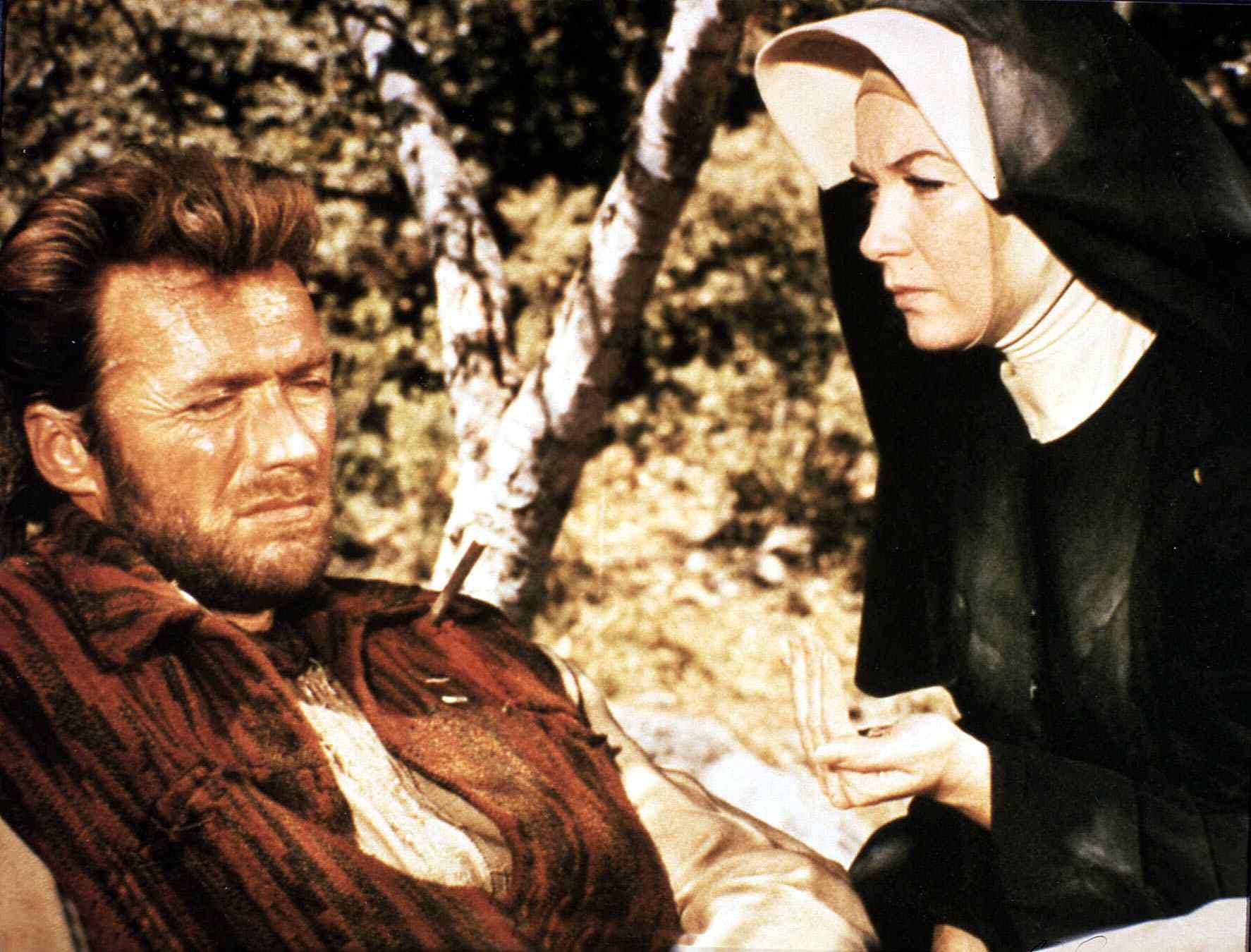
Two Mules for Sister Sara, published in 1967, is a historical novel by Sharon Wood that immerses readers in the tumultuous era of the California Gold Rush (1848–1855). The story blends fact and fiction to explore themes of survival, cultural clash, and the redefinition of womanhood in a male-dominated frontier society. Wood’s narrative draws from real historical tensions—between Mexican settlers, Anglo-American prospectors, and Native American communities—while centering the experiences of women often erased from traditional Gold Rush histories. The novel’s publication coincided with a growing literary interest in Western expansion, offering a feminist counter-narrative to the rugged individualism mythos of the era. Its enduring relevance lies in its portrayal of intersectional struggles, where religion, gender, and ethnicity collide in the pursuit of gold and self-determination.
Origins of the Novel and Author Background

Sharon Wood, born Sharon Kaye in 1937, was an American author known for her historical fiction set in the American West. Two Mules for Sister Sara marked her debut novel, published during a period when women writers were increasingly challenging the male-dominated literary landscape of Westerns. Wood’s inspiration stemmed from her fascination with the Gold Rush era, a time when California’s demographic and cultural fabric underwent radical transformation. Unlike traditional Westerns that glorified frontier masculinity, Wood’s work humanized marginalized voices, particularly women and Mexican-Americans, whose stories were frequently sidelined in historical accounts.
The novel’s title itself reflects Wood’s subversive approach: it rejects the conventional heroism of prospectors, instead focusing on the resilience of Sister Sara, a Catholic nun navigating a hostile environment. Wood’s research included archival materials on California’s californios (Mexican settlers) and the Gold Rush’s impact on indigenous populations, ensuring the narrative’s authenticity. Published by Harper & Row, the book quickly gained recognition, winning the Western Writers of America Spur Award in 1968—a testament to its historical depth and literary merit.
The California Gold Rush: Historical Setting and Narrative Influence
The California Gold Rush (1848–1855) was a defining moment in American history, attracting over 300,000 prospectors—known as forty-niners—to the western frontier. Triggered by James W. Marshall’s discovery of gold at Sutter’s Mill in 1848, the rush accelerated California’s transition from a Mexican territory to a U.S. state in 1850. This period was marked by violence, exploitation, and rapid social change, with Native American communities displaced, Mexican land grants seized, and women often relegated to domestic or prostitution roles.
Wood’s novel captures these tensions through the lens of Sister Sara, a nun sent to a remote mission to convert miners and provide spiritual solace. The Gold Rush’s chaotic environment—where lawlessness, greed, and cultural clashes reigned—serves as the backdrop for Sara’s journey. The narrative highlights: - Economic desperation: Prospectors risked everything for wealth, often at the expense of morality. - Legal anarchy: Mining camps operated outside formal governance, leading to vigilante justice. - Cultural erosion: Mexican traditions, including land ownership and religious practices, were systematically undermined by Anglo-American settlers.
The novel’s 1849 setting is critical, as it represents the peak of the Gold Rush when San Francisco’s population exploded from 200 to 25,000 in a year, and mining towns like Columbia and Marysville became lawless hubs. Wood’s depiction of these towns—filled with saloons, brothels, and makeshift churches—mirrors historical accounts of the era’s moral ambiguity.
Key Cultural Influences: Mexican-American Relations, Gender Roles, and Religion
The novel’s cultural richness stems from its portrayal of three intersecting communities: Mexican-Americans (californios), Anglo-American settlers, and Native Americans. Each group’s perspective is shaped by distinct historical experiences, which Wood weaves into the narrative’s fabric.
Mexican-American Relations Before the U.S. annexation of California in 1848, the region was part of New Spain and later Mexico, with a society deeply rooted in Catholicism, haciendas (large estates), and indigenous traditions. The Gold Rush disrupted this stability: - Land dispossession: The Treaty of Guadalupe Hidalgo (1848) promised Mexican settlers protection, but many lost land through fraudulent legal maneuvers. - Cultural assimilation: Anglo-Americans viewed Mexican customs as inferior, leading to clashes over language, religion, and social hierarchy. - Economic marginalization: Mexicans were often excluded from mining claims, forcing many into labor or service roles.
Wood’s novel reflects these dynamics through characters like Juan, a californio landowner, and Father Pedro, who grapples with the erosion of Mexican cultural autonomy. The mission where Sara works becomes a symbol of resistance, preserving Mexican heritage amid Anglo-American dominance.
Gender Roles in Frontier Society Women in the Gold Rush era faced limited agency, confined to roles as wives, prostitutes, or missionaries. Wood challenges these stereotypes by portraying Sister Sara as an independent, resourceful figure who defies expectations: - Religious authority vs. frontier pragmatism: Sara’s faith is tested as she confronts the brutality of the frontier, where survival often supersedes morality. - Female labor: Unlike traditional Westerns that exclude women, Sara engages in physical labor, trades, and even self-defense, blurring gender norms. - Prostitution and stigma: The novel acknowledges the realities of women in mining camps, where many turned to sex work for survival, but avoids sensationalism by focusing on Sara’s moral integrity.
The Role of Religion Religion in Two Mules for Sister Sara is a double-edged sword: it offers solace but also becomes a tool of cultural imperialism. The Catholic Church, represented by Sara and Father Pedro, serves as a unifying force for Mexican-Americans but is also co-opted by Anglo-American settlers seeking legitimacy. Key religious themes include: - Syncretism: The blending of Catholic traditions with indigenous and Mexican folk practices. - Missionary hypocrisy: The Church’s role in both protecting and exploiting Native Americans during colonization. - Faith under duress: Sara’s journey tests her belief system, as she witnesses the corruption of gold and the failure of divine justice.
Timeline: Historical Events vs. Novel Events
The novel’s historical accuracy is reinforced by its alignment with key Gold Rush events. Below is a comparative timeline illustrating parallels between real history and Wood’s narrative:
| Year | Historical Event | Novel Event | ||||||||||||||||||||||||||||||||||||
|---|---|---|---|---|---|---|---|---|---|---|---|---|---|---|---|---|---|---|---|---|---|---|---|---|---|---|---|---|---|---|---|---|---|---|---|---|---|---|
| 1848 | Gold discovered at Sutter’s Mill; U.S. declares war on Mexico, leading to the Treaty of Guadalupe Hidalgo (1848), which cedes California to the U.S. | Sara arrives in California as part of a Catholic missionary effort to serve the growing population of miners. | ||||||||||||||||||||||||||||||||||||
| 1849 | Peak of the Gold Rush; San Francisco’s population surges, and lawlessness spreads in mining camps. The California Constitution (1849) excludes women and non-whites from voting. | Sara travels to Columbia, California, a booming mining town, where she encounters violence, corruption, and cultural clashes between Anglo settlers and Mexican residents. | ||||||||||||||||||||||||||||||||||||
| 1849–1850 | Genocide against Native Americans: Thousands of Yana, Miwok, and other tribes are killed or displaced by prospectors and militias. | Sara interacts with Native American communities, witnessing their exploitation and resistance against miners encro
Character Analysis: Sister Sara Creighton – Faith, Survival, and the Frontier’s Unyielding TestSister Sara Creighton, the eponymous protagonist of Two Mules for Sister Sara, emerges as a complex figure whose journey across the brutal Arizona frontier mirrors the broader struggles of identity, faith, and agency in a male-dominated era. Her character transcends the archetype of the selfless nun, blending spirituality with unapologetic pragmatism, compassion with ruthless survival instincts. The novel’s frontier setting amplifies these contradictions, forcing Sara to navigate moral ambiguities where conventional religious teachings often clash with the harsh realities of human endurance. Through her interactions with outlaws like Woolf and the Apache warrior Chato, Sara’s evolution reveals how faith can coexist with pragmatism, and how resilience becomes a form of devotion in the face of adversity.The Duality of Sister Sara: Faith Versus PragmatismSara’s character is defined by a tension between her Catholic upbringing and the pragmatic choices demanded by her circumstances. Raised in a convent where faith was both comfort and constraint, she enters the frontier with an idealistic belief in redemption and service. However, the novel quickly dismantles this idealism, replacing it with a hard-won understanding that survival often requires actions at odds with her vows. Her decision to carry Woolf’s stolen money, for instance, is not merely a pragmatic choice but a deliberate subversion of her religious training. This act reflects her growing belief that compassion must sometimes bend to necessity—a philosophy she later extends to her interactions with Chato, where she balances moral judgment with an acknowledgment of shared humanity. Her faith does not waver, but it transforms. Sara’s prayers become less about seeking divine intervention and more about finding inner strength. When she recites the Hail Mary while caring for Woolf’s wounds, her words are not empty ritual but a desperate plea for guidance in a world where traditional morality offers little protection. The novel portrays her religious beliefs as a dynamic force, not a rigid doctrine, adapting to the chaos of the frontier. This adaptability is crucial to her survival, illustrating how Sara’s spirituality is not a shield against reality but a compass to navigate it.Sara’s Emotional and Psychological Evolution: A Timeline of GrowthSara’s journey is one of incremental but profound change, marked by moments of vulnerability, defiance, and quiet triumph. Below is a structured timeline highlighting key chapters and events that shape her emotional state and decisions, demonstrating her arc from a sheltered novice to a woman who embodies resilience.
Female Agency in the Frontier: Sara as an Outlier Among WomenTwo Mules for Sister Sara presents a frontier where women are typically confined to domestic roles or relegated to victims of circumstance. Sara stands out as an exception, her agency manifesting in her ability to navigate a world dominated by men—both lawmen and outlaws. Unlike the passive or subservient women in the novel, such as the terrified settlers or the powerless nuns in her past, Sara’s agency is active and often subversive. Her refusal to be a passive observer—whether in the face of Woolf’s brutality or the Apache’s suspicion—challenges traditional gender roles of the era. Her relationship with Woolf further illustrates this agency. While other women in the story are either objects of protection or pity, Sara engages Woolf as an equal, negotiating with him rather than submitting. This dynamic is revolutionary for the time, depicting female agency not as a threat but as a necessity for survival. Even her interactions with Chato, though fraught with cultural barriers, are marked by mutual respect, highlighting how Sara’s agency transcends racial and gender divides. Yet, Sara’s agency is not without cost. The frontier demands that she shed some aspects of her femininity—her vulnerability, her naivety—to endure. This transformation is not a loss of identity but a redefinition of it, one that aligns with the novel’s themes of resilience and reinvention.The Symbolism of the Mules: Burdens, Freedom, and ResilienceThe two mules that give the novel its title are more than mere beasts of burden; they are extensions of Sara’s psyche, embodying her struggles, her freedom, and her unyielding spirit. Initially, the mules represent the physical and emotional weight Sara carries—the stolen money, her guilt, and the expectations placed upon her. Their presence is a constant reminder of her mission, but also of the constraints she must navigate. When Woolf forces her to carry the money, the mules become symbols of her complicity in a moral gray area, a burden she must shoulder to survive. Yet, the mules also symbolize freedom. As Sara journeys deeper into the frontier, the mules become her companions, her only reliable allies in a lawless land. Their endurance mirrors her own, and their loyalty reinforces her sense of purpose. The scene where Sara rides one of the mules to escape her captors is particularly telling—it is a moment of liberation, where she reclaims control over her fate. The mules, therefore, are not just tools but partners in her survival, representing the resilience required to thrive in an unforgiving environment. Finally, the mules serve as a metaphor for Sara’s duality. Like her, they are strong yet vulnerable, capable of carrying immense loads but also of breaking under pressure. Their survival alongside Sara’s underscores the novel’s central theme: resilience is not the absence of burden but the ability to endure despite it.Defining Sara: The Weight of Her WordsSara’s most defining moment comes not in action but in a single, haunting line that encapsulates her transformation:"I don’t know if I’m a saint or a sinner. But I know I’m a woman who’s been through hell and come out the other side."This quote is more than a confession; it is a manifesto of Sara’s journey. By rejecting the binary of saint or sinner, she asserts her humanity, acknowledging the moral complexities of her choices. The phrase "been through hell and come out the other side" is a testament to her resilience, a declaration that survival is its own form of redemption. It also underscores the novel’s critique of rigid moral judgments, suggesting that in the frontier, as in life, the lines between right and wrong are often blurred by necessity. Her words reflect a hard-won wisdom: faith is not about perfection but about endurance. Sara Themes in Two Mules for Sister Sara: Faith, Survival, and RedemptionTwo Mules for Sister Sara by Sister Mary Ignatius Ward weaves a complex tapestry of themes that reflect the moral and existential struggles of individuals navigating the brutal frontier of the California Gold Rush. At its core, the novel explores the duality of faith—where spiritual devotion clashes with the harsh, often amoral demands of survival. Characters grapple with redemption in a world where violence, greed, and exploitation define daily life, while their identities are constantly tested against the backdrop of racial, cultural, and religious prejudices. The narrative critiques the myth of Manifest Destiny, exposing its hypocrisies through the lens of marginalized voices, particularly women, mixed-race individuals, and the indigenous communities displaced by westward expansion. The frontier serves as a crucible where faith is not merely a source of comfort but a battleground for meaning. For Sister Sara, a Franciscan nun, devotion is both her armor and her burden, while for Woodrow, a former slave and mixed-race man, faith becomes a means of reclaiming dignity in a society that denies him humanity. Their journeys reveal how survival often demands moral compromises, forcing characters to confront whether their principles can endure the frontier’s unyielding tests.Faith as Conflict: Devotion vs. Survival in a Godless WildernessThe novel presents faith as a dual-edged sword, capable of sustaining hope yet also becoming a source of internal conflict when confronted with the brutality of the Gold Rush era. Sister Sara’s unwavering Catholicism clashes with the reality of a landscape where lawlessness reigns, and human life is often disposable. Her prayers and rituals provide solace, but they also highlight the disconnect between divine teachings and the frontier’s moral vacuum. Scenes where she tends to the wounded or buries the dead underscore the tension between her role as a healer and the inevitability of suffering in this environment. Woodrow’s relationship with faith is equally complex. As a mixed-race man, he is denied both white privilege and full acceptance within Black communities, forcing him to navigate spirituality as a tool for resilience rather than dogma. His internal monologues reveal a pragmatic faith, where belief in a higher power coexists with the necessity of self-preservation. The novel suggests that in such a hostile world, faith is not a passive comfort but an active struggle—one that requires constant negotiation between idealism and survival. The frontier itself becomes a symbolic antagonist, challenging the characters’ beliefs through extreme circumstances. For example, when Sister Sara is forced to abandon her religious garments to survive, she embodies the sacrifice of identity for survival, a metaphor for how faith must adapt to endure. Similarly, Woodrow’s decision to protect Sister Sara, despite the risks, reflects how faith—whether religious or moral—can transcend institutional dogma when tested by adversity.Redemption Through Struggle: Moral Dilemmas and Their ResolutionsRedemption in Two Mules for Sister Sara is not granted through passive virtue but earned through active confrontation with moral dilemmas. Characters face choices that force them to reconcile their principles with their humanity, often at great personal cost. Below is a table summarizing key dilemmas and their outcomes, illustrating how redemption is achieved—or lost—through action.
Identity in Flux: Mixed-Race Struggles and the Frontier’s HypocrisiesThe novel dissects identity as a fluid and contested construct, particularly for mixed-race characters like Woodrow, who exist in the interstitial spaces of a society obsessed with racial purity. Woodrow’s identity is a site of conflict, denied by white settlers who see him as a threat and rejected by Black communities that view him as an "uncle Tom" for collaborating with whites. His internal monologues expose the psychological toll of erasure, as he grapples with whether to embrace his mixed heritage or conform to the expectations of either race to survive. The frontier’s hypocrisy regarding race is laid bare through scenes where Woodrow is praised for his skills but despised for his blood. For example, his relationship with Sister Sara—where she initially distrusts him due to his race—highlights how even allies can internalize prejudice. His eventual acceptance by the community, however, comes not through assimilation but through proving his worth beyond racial stereotypes, a theme that resonates with broader struggles for recognition in marginalized groups. The novel also explores indigenous identity, though more subtly. Characters like the Native American woman, Maria, represent the erasure of indigenous voices in the narrative of westward expansion. Her presence is fleeting, symbolizing how the frontier’s mythologizing of Manifest Destiny silences those it displaces. The contrast between Woodrow’s visible struggle for identity and Maria’s near-invisibility underscores the hierarchy of oppression, where mixed-race individuals face scrutiny while indigenous peoples are rendered invisible.Violence and Trauma: The Psychological Scars of the FrontierViolence in Two Mules for Sister Sara is not merely physical but psychological, leaving characters with lasting trauma that reshapes their perceptions of faith, morality, and humanity. The novel depicts the frontier as a space where brutality is normalized, and survival often depends on complicity in acts of cruelty. Sister Sara’s nightmares and Woodrow’s hypervigilance reflect how trauma redefines their sense of safety, forcing them to develop coping mechanisms that blur the line between protection and paranoia. Key scenes illustrate this psychological impact:Setting as a Character: The Gold Rush Era and Its Brutal Shaping of Two Mules for Sister SaraThe California Gold Rush of the 1840s did not merely serve as a backdrop for Two Mules for Sister Sara—it functioned as an active, often hostile force that dictated the novel’s rhythm, conflict, and moral dilemmas. William R. Burnett’s narrative transforms the rugged Sierra Nevada and lawless boomtowns into a living entity, one that tests the limits of human endurance while forcing characters to confront their faith, morality, and identity. The physical and social landscape of the era was not just a setting but a crucible where survival demanded brutal adaptations, from navigating treacherous terrain to navigating the ethical quagmires of a society built on greed and desperation. The novel’s realism is anchored in the harsh historical truth that the Gold Rush was as much about the search for gold as it was about the fight against the elements, disease, and the moral decay that thrived in its wake. The Gold Rush era reshaped California’s geography and demography overnight, turning isolated villages into chaotic melting pots and pristine wilderness into scarred, exploited land. By 1849, an estimated 90,000 prospectors—known as the "Forty-Niners"—had flooded into California, drawn by promises of instant wealth. This influx created a parallel world of makeshift towns, tent cities, and lawless camps where violence, fraud, and exploitation were rampant. Indigenous populations, including the Miwok, Yokuts, and other Native American tribes, faced catastrophic displacement, forced labor, and outright massacre as settlers seized their lands. The novel reflects this historical brutality subtly yet powerfully, positioning Sister Sara and Woost as outsiders navigating a landscape where trust is a liability and every resource—water, food, shelter—is fiercely contested.The Physical and Social Landscape: A World of Scarcity and SurvivalThe Sierra Nevada mountains, with their towering peaks and dense forests, were both a barrier and a lifeline during the Gold Rush. For prospectors, the mountains were a labyrinth of hidden gold veins, but they were also a gauntlet of extreme weather, avalanches, and starvation. The novel captures this duality through the journey of Sister Sara and Woost, whose trek from San Francisco to the mining camps mirrors the real-life struggles of travelers. Historical accounts describe the Sierra Nevada as a "high Sierra death trap," where temperatures could plummet to -20°F (-29°C) in winter, and snowstorms could bury entire wagon trains. The novel’s depiction of their arduous passage—navigating snowdrift-choked trails, rationing food, and enduring Woost’s physical decline—grounds the story in the grim reality that for many, the journey was deadlier than the destination. San Francisco, the gateway to the Gold Rush, was a city of contradictions: a burgeoning commercial hub and a den of vice. By 1849, its population exploded from a few hundred to over 25,000, transforming it into a lawless metropolis where saloons, brothels, and gambling halls thrived alongside makeshift churches and government offices. The novel’s opening scenes in San Francisco reflect this chaos, with Sister Sara encountering a world where morality is fluid and survival often hinges on exploiting others. Historically, the city was plagued by disease—cholera and dysentery were common—and violence was endemic. The infamous "Hangtown" (Placerville) and "Hell’s Delight" (a region near Columbia) were names that encapsulated the moral decay of the era, where lynchings and robberies were almost daily occurrences. Burnett’s portrayal of these locations underscores how the Gold Rush warped human behavior, reducing many to little more than animals fighting for scraps in a land of plenty. The mining camps themselves were microcosms of societal collapse. Towns like Sutter’s Mill, where gold was first discovered, became overcrowded slums where prospectors lived in shanties, gambling away their earnings in a single night. The novel’s depiction of these camps—filthy, violent, and transient—mirrors historical accounts of places where the search for gold often led to ruin. The scarcity of resources in these camps forced characters to make impossible choices, a theme central to Two Mules for Sister Sara. Water, for instance, was a precious commodity; prospectors would fight over streams, and some even poisoned rivals’ claims to monopolize access. The novel’s focus on Sister Sara’s struggle to secure food, medicine, and safety for Woost highlights how the Gold Rush turned basic human needs into commodities with a price tag.Geographical Breakdown: Key Locations and Their Narrative SignificanceThe novel’s geography is not merely a series of waypoints but a series of moral and physical challenges that shape the characters’ arcs. Below is a breakdown of key locations and their significance to the plot:
The Role of Animals: Symbols of Survival and the Wild FrontierAnimals in Two Mules for Sister Sara are more than mere plot devices—they are extensions of the characters’ struggles and the untamed nature of the frontier. The title itself, Two Mules for Sister Sara, hints at the novel’s reliance on animals as both practical tools and symbolic reflections of the era’s harshness. The mules, in particular, embody the resilience and endurance required to survive the Gold Rush. Historically, mules were the beasts of burden for prospectors, capable of carrying heavy loads over treacherous terrain where horses and oxen would fail. In the novel, the mules are not just pack animals but silent companions to Sister Sara, their strength and stamina mirroring her own determination. Their presence also underscores the novel’s themes of companionship and mutual dependence in a hostile world. The mules’ eventual fate—whether through exhaustion, theft, or sacrifice—serves as a metaphor for the transient nature of survival in the Gold Rush. Woost’s horse, meanwhile, represents his connection to the past and his struggle to reclaim his identity. Horses were prized possessions in the Gold Rush, often the last remnants of a prospector’s former life. Woost’s horse is a symbol of his journey from a desperate, broken man to one who seeks redemption. The animal’s role in his physical and emotional recovery highlights the novel’s focus on the restorative power of nature and the bonds between humans and animals in a lawless world. Wildlife, such as bears and wolves, further emphasizes the untamed nature of the frontier. Historical accounts describe the Sierra Nevada as teeming with wildlife, but the Gold Rush disrupted these ecosystems as settlers encroached on animal habitats. In the novel, encounters with bears and wolves are not just sources of danger but moments that force charactersAdaptations and Legacy: From Novel to Screen – How Two Mules for Sister Sara Transcended LiteratureThe transition of Two Mules for Sister Sara from a novel by Sister Mary Ignatius Parker (under the pseudonym Maude Oakes) to a 1970 film directed by Don Siegel marked a pivotal moment in its cultural dissemination. The adaptation, while retaining the core narrative of survival and faith, underwent significant alterations to align with Hollywood conventions and the sensibilities of the era. The film’s portrayal of Sister Sara, reimagined through Shirley MacLaine’s performance, introduced nuances that both amplified and diluted the novel’s original themes. Critical reception at the time reflected a society grappling with shifting moral landscapes, while the film’s legacy continues to resonate in modern discussions on resilience, gender, and human endurance. The adaptation process involved a delicate balance between preserving the novel’s gritty realism and softening its more explicit elements for mainstream audiences. Key changes—such as the omission of certain characters, the recontextualization of violence, and the emphasis on romantic subplots—were not merely creative choices but reflections of 1970s censorship norms and the evolving portrayal of women in cinema. Below, an analysis explores these transformations, their reception, and the novel’s enduring relevance in contemporary discourse.Key Adaptations: From Novel to Film – What Was Added, Omitted, or AlteredThe 1970 film adaptation of Two Mules for Sister Sara deviated from the novel in several critical ways, primarily to streamline the narrative for cinematic pacing and to accommodate the Hays Code, which governed Hollywood productions until 1968. While the novel presented a stark, unflinching portrayal of survival in a lawless frontier, the film softened certain elements to appeal to broader audiences. The most notable changes include:Sister Sara in Novel vs. Film: A Comparative Analysis of PortrayalThe character of Sister Sara undergoes subtle yet significant transformations between the novel and film, shaped by the medium’s limitations and the actor’s interpretation. Below is a comparative breakdown of her portrayal:
Critical Reception and Cultural Impact: How the Film Shaped the Novel’s LegacyUpon its release, Two Mules for Sister Sara received mixed but generally positive reviews, praised for its strong performances, particularly MacLaine’s, and its unconventional Western narrative. However, critics were divided over its tone and pacing, with some arguing that the film’s romantic subplot detracted from its gritty realism.
Navigating Moral Dilemmas in High-Stakes SituationsThe novel presents Sister Sara with ethical quandaries—balancing compassion with pragmatism, justice with survival—that mirror modern dilemmas in leadership, healthcare, or social justice. Her decisions, often rooted in faith but tempered by necessity, offer a framework for ethical decision-making under pressure. Frameworks for Ethical Decision-Making:Applying Faith and Doubt to Modern Existential CrisesSister Sara’s internal struggle between faith and doubt resonates in contemporary existential challenges, from burnout to identity crises. The novel portrays faith not as blind certainty but as a dynamic dialogue—one that evolves with experience. This perspective is particularly relevant in an era where spiritual crises are on the rise, with 40% of Gen Z reporting "spiritual but not religious" identities (Pew Research, 2021). Practical Steps for Navigating Faith in Crisis:Survival Skills with Modern RelevanceThe novel’s portrayal of frontier survival—resource management, trust-building, and conflict resolution—offers practical skills applicable to modern challenges, from remote work to crisis management. Sister Sara’s strategies can be categorized into three domains: physical, social, and psychological survival. Resource Management in Uncertain Times: The Gold Rush era demanded creativity in scarcity. Sister Sara’s approach includes:Two Mules for Sister Sara endures not just as a historical novel but as a timeless exploration of what it means to survive with integrity in a world that rewards ruthlessness. Sharon Wood’s masterpiece challenges readers to question the boundaries between morality and pragmatism, faith and desperation, and freedom and obligation. From its gritty frontier setting to its complex characters, the story resonates today, offering lessons on resilience, empathy, and the enduring search for redemption—whether in the Sierra Nevada mountains or the modern landscapes of human struggle. |
Leave a Comment
Comments are moderated before appearing. The data you submit is processed according to the Privacy Policy of Vetlife Archive.