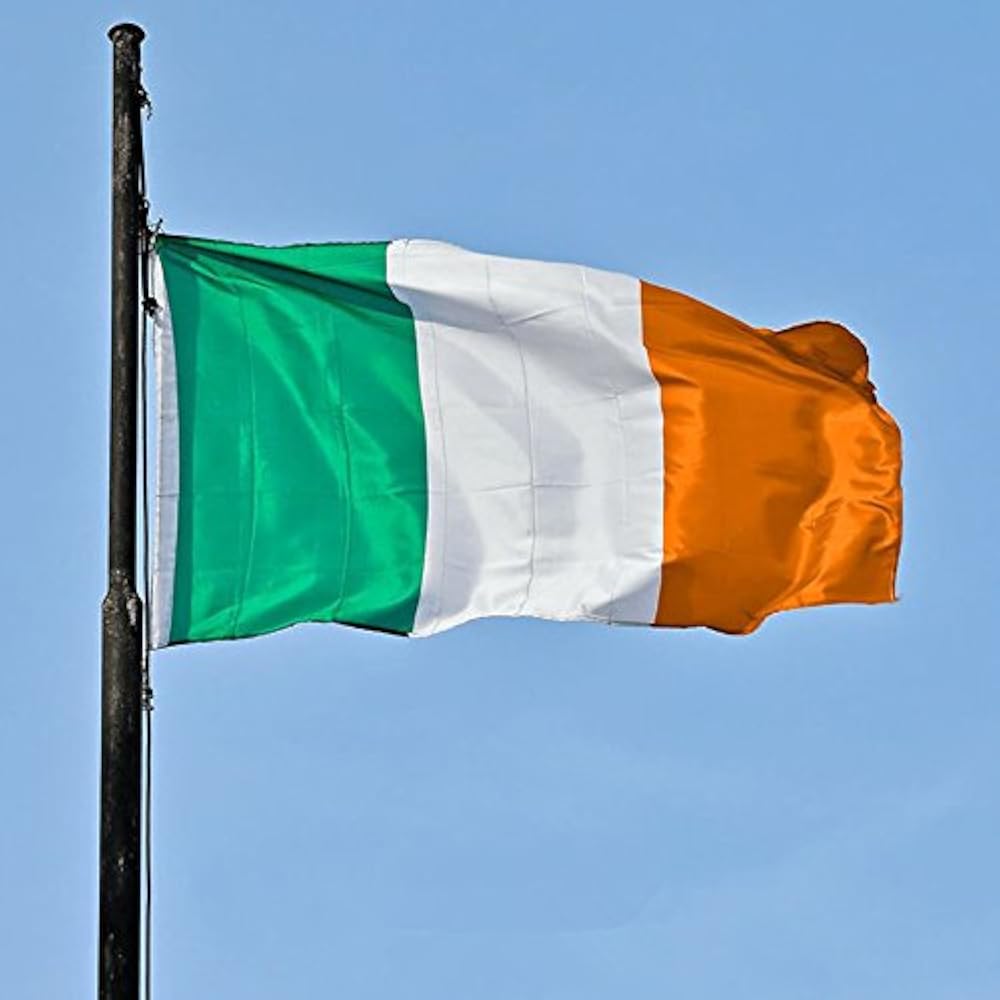
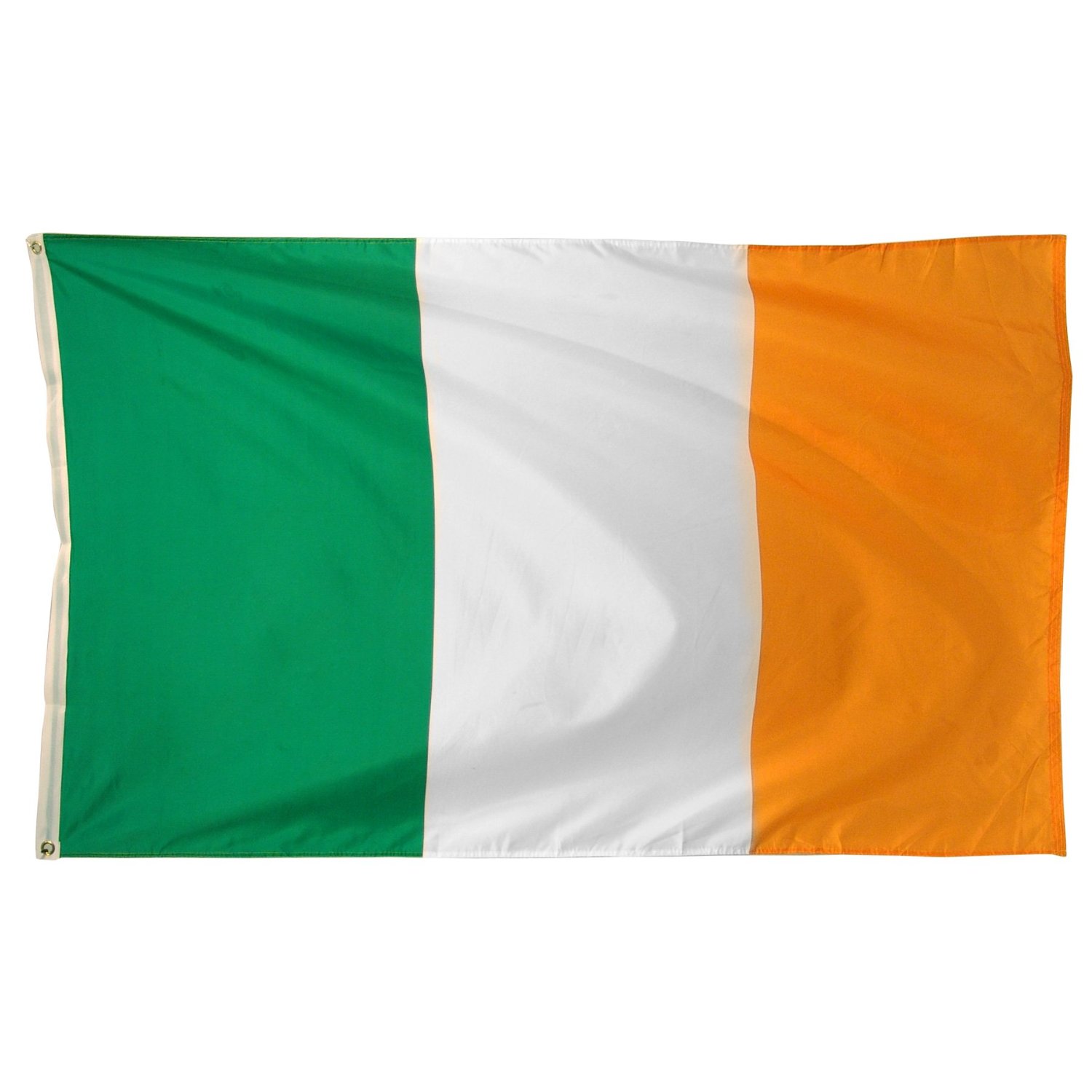
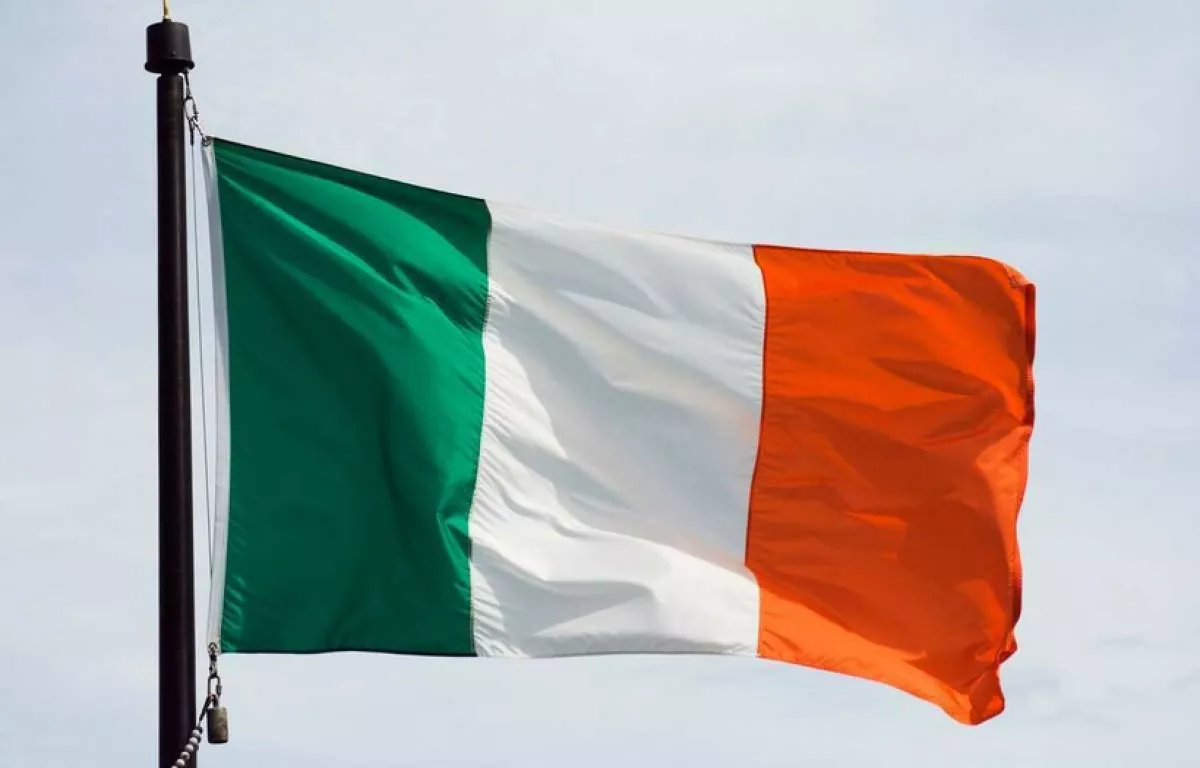
| Irish Tricolour |
Three vertical stripes: green (Catholics), white (peace), and orange (Protestants). |
Adopted in 1848 by the Young Irelanders; officially declared the national flag of Ireland in 1919. |
- Represents unity between Catholics and Protestants.
- Symbolizes Irish republicanism and sovereignty.
- The white stripe signifies a truce between factions.
|
- Official flag of the Republic of Ireland and Northern Ireland’s nationalist communities.
- Design Elements and Symbolism of the Flag of South Ireland
The Flag of South Ireland, often referred to as the Tricolour of the South or Flag of the Irish Republic, embodies a complex interplay of historical, cultural, and political symbolism. Its design transcends mere aesthetics, serving as a visual narrative of Irish identity, regional pride, and the aspirations of its people. The flag’s composition—colors, emblems, and layout—reflects a deliberate fusion of tradition and modernity, while its deviations from conventional vexillological standards underscore its unique role in Irish heritage. Understanding these elements reveals how the flag functions not only as a symbol of sovereignty but also as a unifying or divisive force in contemporary Irish discourse.
Visual Components and Their Symbolic Meanings
The most widely recognized version of the Flag of South Ireland mirrors the national flag of Ireland but is often interpreted through a distinctly southern or republican lens. Its primary visual elements include:
- Colors: Vertical tricolor bands of green, white, and orange.
- Green traditionally represents Gaelic (Catholic) Ireland, evoking associations with the countryside, the Irish language, and the fight for independence.
- White symbolizes peace and unity, a deliberate contrast to the sectarian divisions of the past. It also reflects the flag’s historical ties to the 1848 Young Irelander movement, which sought reconciliation between Catholic and Protestant factions.
- Orange acknowledges the Protestant and Ulster-Scots communities, though its inclusion in southern contexts often sparks debate. In the southern tricolor, orange is frequently interpreted as a nod to inclusivity rather than unionism, aligning with the post-1998 peace process ideals of shared island identity.
- Emblems:
- The golden harp (a stylized version of the Brian Boru harp) is central to many southern variations, representing Irish sovereignty, heritage, and cultural resilience. Its placement—often centered on the white band—reinforces themes of harmony and leadership.
- The shamrock, while not always included, serves as a secondary emblem in some designs, symbolizing Celtic heritage, St. Patrick, and the three provinces of Ireland (Leinster, Munster, Connacht). Its three-leaf structure mirrors the tricolor’s tripartite structure, creating a visual metaphor for unity.
- Regional motifs such as the Munster cross or Celtic knots appear in lesser-known variants, emphasizing local identity within the broader southern narrative.
The layout adheres to proportional symmetry, with the harp or shamrock typically occupying the white band to avoid overwhelming the color fields. This adherence to balance reflects a conscious effort to project stability and equilibrium, contrasting with the asymmetrical designs of some unionist flags.
Color Psychology and Emotional Associations
The color scheme of the Flag of South Ireland is a masterclass in psychological symbolism, designed to evoke specific emotional and political responses. Research in vexillology and color theory highlights how these hues resonate with different audiences:
- Green activates associations with nationalism, fertility, and rebellion, aligning with Ireland’s historical struggles for independence. Studies on flag psychology suggest green triggers pride and solidarity, particularly among those who identify with the Gaelic revival or republican movements. However, its dominance can also polarize, as it is often linked to exclusionary narratives in Northern Ireland.
- White serves as a neutralizing force, mitigating the potential for conflict. Its use in flags globally is tied to purity, truce, and international recognition (e.g., the white bands in the flags of France or Italy). In the Irish context, white is frequently cited in political rhetoric as a symbol of the Good Friday Agreement, representing the end of "the Troubles."
- Orange introduces ambiguity and tension. While historically tied to Protestant and unionist identity, its inclusion in southern flags is often framed as a gesture of reconciliation. Color perception studies indicate that orange can evoke energy and determination, but its presence in a predominantly green-and-white field may alienate those who associate it with British loyalism.
The interplay of these colors creates a dynamic tension: green and orange, historically adversarial, are unified by white, suggesting a path forward. This design choice reflects the post-colonial Irish psyche, where symbols of division are deliberately repurposed for cohesion.
Vexillological Principles and Deviations
The Flag of South Ireland adheres to several standard vexillological principles while incorporating deviations that reflect its political and cultural context:
- Contrast and Visibility: The tricolor’s high contrast between green, white, and orange ensures recognizability at a distance, a critical factor in flag design. The white band acts as a visual divider, preventing color bleed and maintaining clarity.
- Simplicity: The flag’s design avoids excessive embellishments, aligning with the vexillological "less is more" principle. However, some southern variants—such as those incorporating the harp or shamrock—introduce secondary symbols, which can complicate interpretation without detracting from the core message.
- Proportions: The 1:2 ratio (height to width) is conventional, but the placement of emblems varies. For example:
- The official Irish flag centers the harp on the white band, creating a balanced composition.
- Republican variants may shift the harp slightly toward the hoist (left side), subtly emphasizing sovereignty and left-leaning politics.
- Cultural organization flags (e.g., those used by Irish language advocates) might integrate the shamrock asymmetrically to highlight regional or linguistic identity.
Deviations from standard principles often serve political or cultural signaling. For instance, the absence of the orange band in some southern republican flags (e.g., the Star Spangled Banner of Éire) rejects unionist symbolism entirely, positioning the flag as a purely nationalist emblem.
Alternative Designs and Proposed Variations
The Flag of South Ireland has inspired numerous alternative designs, each reflecting the diverse interpretations of Irish identity. These variations often emerge from political movements, cultural organizations, or grassroots initiatives:
- Republican and Sovereigntist Variations:
- Star Spangled Banner of Éire: A green field with a golden sunburst and a white harp, symbolizing republicanism and the 1916 Easter Rising. The sunburst represents radiant sovereignty, while the harp’s prominence underscores Gaelic Ireland.
- Munster Cross Flag: Features a red saltire (X-shaped cross) overlaid on the tricolor, representing the four provinces (green for Munster, white for Leinster, orange for Ulster, and red for Connacht). This design is popular in southern counties like Cork and Kerry, where regional pride is strong.
- Unionist and Inclusive Proposals:
- Ulster-Scots-Inspired Tricolour: Some cross-community groups in the south propose a flag with additional emblems, such as a Ulster-Scots thistle or a Celtic cross, to acknowledge shared island heritage. These designs aim to bridge the north-south divide but are often criticized for diluting southern identity.
- Peace Process Flags: Post-1998, organizations like Community Relations Councils have promoted flags with interlaced harps or hands, symbolizing reconciliation. These are less about regional identity and more about national unity.
- Cultural and Linguistic Emphasis:
- Gaeilge (Irish Language) Flag: A tricolor with a white shamrock and a green Celtic knot, used by Irish language advocacy groups. The knot represents endless heritage, while the shamrock ties to St. Patrick’s legacy.
- Munster Provincial Flag: A green field with a gold Munster cross, adopted by sporting and cultural associations to represent the southern province’s distinct identity.
These alternatives highlight the fluidity of Irish symbolism, where flags are not static but evolve with political and social shifts.
Historical and Political Interpretations of Flag Symbolism
The Flag of South Ireland’s symbolism has been analyzed by historians, politicians, and cultural theorists, often yielding contrasting perspectives:
"The tricolor is not merely a flag; it is a living document of Ireland’s struggle for self-determination. The green represents the blood of those who fought for freedom, the orange is a painful but necessary acknowledgment of our shared history, and the white is the hope that we might one day look beyond division." — Dr. Liam Ó Grianna, Historian and Author of Flags and Nationalism in Ireland
This interpretation aligns with the post-1998 consensus, where the flag is viewed as a tool for
Regional Identity and the Flag of South Ireland: A Symbol of Unity and Division
The Flag of South Ireland, often referred to as the Tricolour of the South or Banbha’s Banner, transcends its role as a mere emblem of political aspiration. It serves as a visceral representation of regional identity, particularly in areas where nationalist and republican sentiments run deep. Unlike the Irish tricolour, which symbolizes the entire island, this flag is deeply rooted in the cultural and historical fabric of Munster, Leinster, and parts of Ulster, where its presence in public life reinforces a distinct sense of belonging. Its display at sports events, festivals, and community gatherings transforms it into a dynamic tool for solidarity, while its controversial nature in certain contexts underscores the complex interplay between pride, politics, and regional autonomy. Comparable to flags like the Scottish Saltire or the Catalan Senyera, the Flag of South Ireland embodies both unifying and divisive forces, reflecting broader debates on subnational identity in Europe.
The flag’s regional significance is most pronounced in Munster, the heartland of Irish republicanism and home to cities like Cork, Limerick, and Waterford, where its presence is ubiquitous in working-class neighborhoods and nationalist strongholds. In Leinster, particularly in Dublin’s southside and counties like Wicklow and Kildare, the flag appears alongside the Irish tricolour but carries a subtly different connotation—one tied to grassroots republicanism and anti-establishment sentiment. Even in Ulster, where its use is less dominant, pockets of nationalist communities in cities like Derry/Londonderry and Belfast’s nationalist enclaves display the flag to assert a shared southern identity, distinct from unionist symbols. The flag’s visibility in these regions is not merely decorative; it acts as a silent but powerful statement of resistance and belonging, particularly in areas historically marginalized by British rule or economic neglect.
Everyday Display and Cultural Reinforcement
The Flag of South Ireland integrates seamlessly into the daily lives of its supporters, appearing in contexts where regional pride is celebrated or political messages are conveyed. At GAA (Gaelic Athletic Association) matches, particularly in Munster and Leinster, the flag is waved alongside the Irish tricolour, though its presence is often more pronounced in clubs with strong republican affiliations, such as Cork’s Blackrock or Limerick’s Ahane. In these settings, the flag’s display is less about formal recognition and more about informal solidarity, reinforcing a shared history of resistance against colonialism and later, economic exclusion. Similarly, during St. Patrick’s Day parades, the flag is prominently featured in southern Ireland, especially in Cork and Limerick, where organizers often incorporate it into floats or banners to highlight the region’s distinct cultural heritage.
Cultural festivals further amplify the flag’s role as a symbol of regional identity. Events like Lisdoonvarna’s Matchmaking Festival in Clare or Galway’s Oyster Festival occasionally incorporate the flag into their decor, though its inclusion is more deliberate in Munster-based festivals such as the Cork International Choral Festival or the Limerick City of Culture events. Here, the flag is not just a backdrop but an active participant in the narrative of southern Irish culture, linking music, language, and history to a broader sense of regional autonomy. Even in digital spaces, the flag is used by activists, artists, and community groups to challenge narratives of Irish unity and assert a southern perspective, particularly on social media platforms where debates over Brexit, Irish reunification, and economic disparities frequently surface.
Public Display and Controversies
The flag’s presence in public spaces is both celebrated and contested, reflecting the polarizing nature of subnational symbols. In Cork City, murals depicting the Flag of South Ireland alongside revolutionary figures like Michael Collins or Wolfe Tone are common in working-class areas like Douglas or Ballintemple, where the flag’s message resonates strongly. Similarly, in Derry/Londonderry, nationalist murals in the Creggan or Bogside neighborhoods often include the flag to emphasize a shared southern Irish identity with the Republic. However, its display is not without controversy. In Dublin, the flag has been removed from public buildings or festivals on occasion due to sensitivities around its political implications, particularly in areas with a mixed nationalist-unionist population. Such incidents highlight the flag’s role as a lightning rod for debates on Irish unity, with critics arguing that it undermines the island’s shared identity while supporters insist it represents a legitimate regional voice.
The flag’s divisive potential is further illustrated by its limited adoption in unionist or loyalist spaces, where symbols like the Ulster Banner or the Red Hand of Ulster dominate. Unlike the Scottish Saltire, which enjoys broad support across Scotland’s political spectrum, or the Catalan Senyera, which is a unifying force in Catalan identity, the Flag of South Ireland remains deeply politicized. Its use is often tied to specific ideological stances—whether republicanism, socialism, or regional nationalism—which can alienate those outside these movements. Yet, in areas where it is embraced, the flag serves as a counter-narrative to dominant Irish or British symbols, offering a visual and emotional connection to a history of resistance and cultural distinctiveness.
Comparative Analysis: Regional Flags and Their Roles
When compared to other regional flags in Europe, the Flag of South Ireland occupies a unique position in the spectrum of subnational identity. The Scottish Saltire, for instance, functions primarily as a cultural and historical emblem, with broad appeal across Scotland’s political landscape. Its design, rooted in the legend of St. Andrew, transcends party lines and is celebrated even in conservative or unionist circles. In contrast, the Catalan Senyera serves as a unifying force for Catalonia’s distinct language, history, and push for autonomy, with its red and yellow stripes symbolizing the region’s medieval past and modern aspirations. Both flags enjoy institutional recognition, from government buildings to sports teams, without the same level of political controversy.
The Flag of South Ireland, however, operates in a more contentious space. Unlike the Saltire or Senyera, it lacks official recognition from the Irish state or the Northern Ireland Assembly, which contributes to its underground or grassroots appeal. Its use is often tactical, deployed in moments of political tension or cultural celebration to assert a southern Irish identity that is separate from—but not necessarily opposed to—the broader Irish nation. This contrasts with flags like the Basque Ikurrina or the Welsh Dragon, which, while politically charged, are also institutionalized in regional governance. The Flag of South Ireland’s strength lies in its adaptability—it can be a symbol of local pride at a GAA match or a radical statement at a protest, depending on the context.
Key Regional Events Featuring the Flag of South Ireland
The Flag of South Ireland is prominently displayed at several festivals and events across southern Ireland, where its presence reinforces regional identity and political messaging. Below is a table outlining key events where the flag plays a central role, including its symbolic function and estimated attendance.
| Event Name |
Location |
Date |
Flag’s Role |
Estimated Attendance |
| Limerick City of Culture Festival |
Limerick, Munster |
Annual (July–August) |
The flag is prominently featured in parades, street performances, and cultural exhibits, emphasizing Limerick’s role as a hub of southern Irish identity. It appears alongside traditional music and republican-themed art installations, reinforcing the city’s historical ties to the 1916 Easter Rising and later nationalist movements.
|
50,000–70,000 |
| Cork International Choral Festival |
Cork, Munster |
Annual (June) |
Choral groups from across Munster incorporate the flag into their performances or stage decor, often singing songs associated with southern Irish republicanism, such as "The Fields of Athenry" or "We’ll Keep a Right Good Fellowship." The flag’s presence is a nod to Cork’s reputation as a stronghold of Irish republicanism.
|
30,000–50,000 |
| St. Patrick’s Day Parade (Cork Edition) |
Cork City, Munster |
17 March (Annual) |
Controversies and Political Debates Surrounding the Flag of South Ireland
The Flag of South Ireland, often associated with the historic Irish Republic or the modern concept of a united Ireland, remains a potent symbol deeply intertwined with political tensions on the island. Its display frequently sparks debates over national identity, sovereignty, and the future of Irish unification. While some view the flag as a unifying emblem of Irish heritage, others perceive it as a provocative assertion of territorial claims or a challenge to the existing political order. Controversies surrounding the flag have manifested in legal disputes, public protests, and diplomatic tensions, particularly in Northern Ireland, where its use is often contentious. The flag’s symbolic weight has also extended to diaspora communities, where its display can evoke both pride and division. Understanding these debates requires examining the perspectives of key political stakeholders, historical legal restrictions, and documented incidents of conflict tied to its visibility.
The political landscape of Ireland has long been shaped by competing visions of national identity, with the Flag of South Ireland serving as a focal point for these divisions. Its design—inspired by the 1916 Proclamation of the Irish Republic—evokes the struggle for independence and the aspiration for a sovereign, united Ireland. However, in Northern Ireland, where unionism and British identity predominate, the flag is frequently interpreted as a rejection of the current constitutional status quo. This duality has led to its use as both a rallying symbol for Irish nationalism and a contentious political tool in debates over Irish reunification.
Political Perspectives on the Flag’s Legitimacy
The Flag of South Ireland is interpreted differently by major political parties and activist groups, reflecting broader ideological divides on Irish sovereignty and national identity.
Sinn Féin and Irish Republican Movements
For Sinn Féin and other republican groups, the flag represents the legitimate government of all Ireland, as declared in the 1916 Proclamation. Its display is framed as an assertion of democratic rights and a call for a united Ireland. Sinn Féin has historically encouraged its use in both the Republic of Ireland and Northern Ireland, viewing it as a symbol of resistance against British rule and a reminder of Ireland’s historical sovereignty. In 2021, Sinn Féin’s president, Michelle O’Neill, referenced the flag during a speech on Irish reunification, stating:
> "The flag of the Irish Republic is not just a piece of cloth; it is a declaration of our collective identity and our right to self-determination."
This perspective aligns with the party’s broader strategy of normalizing republican symbols in public discourse, particularly in Northern Ireland, where such displays are often met with opposition.
Unionist and Loyalist Groups
Unionist parties, such as the Democratic Unionist Party (DUP) and the Ulster Unionist Party (UUP), view the Flag of South Ireland as a direct challenge to Northern Ireland’s place within the United Kingdom. The DUP, in particular, has criticized its use as an attempt to undermine the Good Friday Agreement (1998), which established power-sharing and recognized Northern Ireland’s constitutional status. In 2017, the DUP’s then-leader, Arlene Foster, condemned the flag’s display at a Gaelic Athletic Association (GAA) event in Belfast, arguing that it "fanned the flames of division" and risked destabilizing peace efforts. Loyalist paramilitary groups, such as the Ulster Defence Association (UDA), have also associated the flag with republicanism and have been involved in incidents targeting its display, including flag burnings and vandalism.
Fine Gael and Fianna Fáil: Cautious Neutrality
In the Republic of Ireland, the governing parties Fine Gael and Fianna Fáil maintain a more measured stance on the flag. While they do not officially endorse its use as a state symbol, they acknowledge its historical significance. Fine Gael, which has historically been more aligned with Irish unity but cautious of provoking unionist backlash, has avoided explicit promotion of the flag in Northern Ireland. Former Taoiseach Enda Kenny stated in 2014 that "the flag of the Irish Republic is a matter for Irish people to decide," emphasizing a pragmatic approach that prioritizes cross-community dialogue. Fianna Fáil, with its roots in the Irish Civil War, has similarly avoided taking a hardline position, though some members have privately supported its symbolic role in unity discussions.
Independent Activists and Civil Society
Beyond political parties, independent activists and civil society groups present a spectrum of views. Some, like the Irish Republican Socialist Movement (IRSM), advocate for the flag’s widespread use as a tool for challenging British sovereignty. Others, such as the Peace and Reconciliation Groups in Northern Ireland, argue that its display without broader context can exacerbate tensions. The Irish Language Movement has occasionally used the flag in cultural events, linking it to the revival of Irish identity, though this is not without controversy in unionist-dominated areas.
Legal Restrictions and Incidents of Conflict
The display of the Flag of South Ireland has been subject to legal restrictions, particularly in Northern Ireland, where its visibility is often regulated to prevent sectarian tensions. These restrictions have evolved alongside political developments, with periods of relaxation and tightening depending on the broader peace process.
Historical Legal Context
Under the Public Order (Northern Ireland) Order 1987, the display of flags that could incite hatred or provoke violence is subject to regulation. While the Flag of South Ireland is not explicitly banned, its use has been scrutinized in contexts where it is deemed likely to cause disorder. For example, in 2000, the Parades Commission (now the Parades Commission for Northern Ireland) restricted the flying of the flag during the Twelfth of July celebrations, a date marking the Battle of the Boyne and a key event in unionist lore. The commission justified the restriction on grounds that the flag’s presence could provoke loyalist backlashed, given its association with republicanism.
In the Republic of Ireland, there are no legal restrictions on the flag’s display, though its use in official capacities remains limited. The Government Buildings in Dublin have occasionally flown the flag during high-profile events related to Irish unity, such as referendums or diplomatic visits, but its permanent display is rare to avoid alienating unionist communities.
Documented Incidents of Conflict
The flag has been central to numerous incidents of tension, including protests, vandalism, and legal challenges. Below is a table summarizing key controversies:
| Incident Description |
Location |
Year |
Parties Involved |
Outcome |
| The flag was prominently displayed at a Gaelic football match in Belfast, leading to loyalist protests and clashes with police. The GAA later apologized for "offending" unionist sensibilities. |
Belfast, Northern Ireland |
2017 |
GAA (organizers), Loyalist groups (UDA, UVF), Police Service of Northern Ireland (PSNI) |
The GAA agreed to a review of its flag policy, and the flag was removed from future events in Northern Ireland. No arrests were made. |
| A Sinn Féin councillor in Belfast was fined for displaying the flag outside his home, which was deemed a breach of local "peace and harmony" guidelines. |
Belfast, Northern Ireland |
2012 |
Sinn Féin councillor, Belfast City Council |
The councillor appealed the fine, which was later overturned on technical grounds. The incident sparked debates on freedom of expression. |
| During a St. Patrick’s Day parade in Derry, the flag was flown alongside the Irish tricolor, prompting loyalist counter-protests and minor scuffles. Police intervened to prevent escalation. |
Derry/Londonderry, Northern Ireland |
2019 |
Parade organizers, Loyalist protesters, PSNI |
No arrests, but the Parades Commission issued a warning about future events requiring prior approval to avoid tensions. |
| A group of republicans unfurled the flag on the Custom House Bridge in Dublin, a symbolic location overlooking the River Liffey and the Northern Ireland border. Unionist politicians condemned the act as "provocative." |
Dublin, Republic of Ireland |
2020 |
Irish republican activists, DUP (via statement) |
The flag was removed by authorities, and no legal action was taken. The DUP called for a ban on its display in Northern Ireland. |
In a controversial move, a school in West Belfast
The Flag of South Ireland, often associated with the Munster region or broader southern Irish identity, transcends its political and regional significance to become a potent cultural symbol. Its depiction in literature, music, film, sports, and visual art reflects the complex interplay between Irish heritage, regional pride, and national identity. From traditional media to modern digital platforms, the flag serves as a visual and emotional anchor in cultural narratives, shaping public perception and fostering collective memory. Its presence in Irish arts and media underscores its role as both a unifying emblem and a contested symbol of regional distinctiveness.
Literary and Cinematic Depictions of the Flag
Irish literature and film frequently employ the Flag of South Ireland—or its thematic equivalents—as a metaphor for regional identity, resistance, and cultural resilience. In Patrick McCabe’s The Butcher Boy (1992), the flag’s imagery subtly underscores the protagonist’s connection to rural Munster, where traditions and landscapes become characters in their own right. Similarly, John McGahern’s The Dark (1965) uses the southern Irish countryside as a backdrop, where the flag’s colors—green, white, and gold—echo the natural hues of the region, reinforcing its symbolic ties to place.
In cinema, Jim Sheridan’s My Left Foot (1989) and Neil Jordan’s The Crying Game (1992) incorporate visual motifs that evoke southern Irish identity, though not explicitly featuring the flag. However, documentaries like Robert Flaherty’s Man of Aran (1934) and John Boorman’s The Wind That Shakes the Barley (2006) use landscapes and cultural symbols—including flags—to depict the struggles and endurance of southern Irish communities. The flag’s absence in mainstream cinema often reflects its contested nature, yet its implied presence in regional storytelling reinforces its cultural weight.
Musical References and Emotional Resonance
Irish music, particularly traditional and folk genres, frequently invokes regional symbols, including the Flag of South Ireland, to evoke nostalgia, resistance, or solidarity. One of the most iconic references appears in The Wolfe Tones’ The Fields of Athenry, though the flag itself is not explicitly mentioned. However, songs like The Dubliners’ The Rocky Road to Dublin, while not flag-specific, celebrate southern Irish landscapes and journeys that resonate with the flag’s symbolic territory.
A more direct musical homage appears in Christy Moore’s The Long Black Veil, where lyrical imagery of southern Ireland’s rural life subtly aligns with the flag’s colors and themes. Yet, the most poignant example is found in Lúnasa’s The South Wind, a song that blends Gaelic traditions with modern folk, using the flag’s symbolism to represent both cultural continuity and political aspiration.
*"The south wind blows where the old flags fly,
Green as the hills where the young men die.
Oh, the south wind carries the echoes of old,
Of the men who fought for the land we hold."*
—Lúnasa, The South Wind (adapted lyrical essence)
This excerpt reflects the song’s historical context: a tribute to the 1916 Easter Rising and the broader struggle for Irish sovereignty, where southern regions played a pivotal role. The "old flags" evoke both the tricolor and regional banners, including those associated with Munster. The emotional resonance lies in its duality—celebrating the land while mourning its sacrifices—a theme that aligns with the flag’s role as a symbol of both pride and loss.
In the digital age, the Flag of South Ireland has found new platforms for dissemination and debate. Social media campaigns, such as those by #MunsterProud or #SouthIrelandStrong, use the flag to promote regional tourism, sports, and cultural events. For instance, during the 2022 Rugby World Cup, Irish fans displayed the flag at matches, blending national pride with regional identity. Similarly, Twitter and Instagram hashtags like #FlagOfMunster or #SouthIrishHeritage amplify its visibility, particularly during St. Patrick’s Day or Gaelic Athletic Association (GAA) events.
Documentaries like RTÉ’s The Flag That Never Was (2015) explore the flag’s historical and political dimensions, while news coverage often highlights its role in protests or cultural festivals. For example, during the 2021 Irish language revival movements, the flag was prominently featured in marches advocating for Gaelic education, linking it to linguistic and cultural preservation.
The Flag in Irish Sports Culture
The Flag of South Ireland holds particular significance in Irish sports, where regional rivalries and identities are fiercely celebrated. In Gaelic football and hurling, the Munster GAA teams frequently incorporate the flag’s colors—green, white, and gold—into jerseys, scarves, and banners. During All-Ireland finals, fans wave flags bearing the Munster crest or the South Ireland emblem, reinforcing the region’s dominance in Gaelic sports.
In association football (soccer), the flag appears at matches involving League of Ireland clubs like Cork City FC or Sligo Rovers, where supporters use it to assert regional pride. Internationally, Irish soccer fans have displayed the flag at UEFA Euro and FIFA World Cup tournaments, though its usage is often contentious due to its political undertones. The flag’s presence in sports reflects its dual role: a symbol of regional unity in Gaelic games and a political statement in broader Irish football culture.
Visual Art and Street Art Depictions
The Flag of South Ireland appears in various forms of visual art, from traditional paintings to contemporary street murals. In 19th-century Irish landscape paintings, artists like Jack Yeats and Paul Henry depicted rural Munster scenes where the flag’s colors—emerald green, white, and gold—mirrored the natural palette of the region. Yeats’ works, in particular, often included subtle references to Irish identity, though not explicitly the flag itself.
In modern street art, the flag has become a canvas for political and cultural expression. Murals in Cork, Limerick, and Waterford feature the flag alongside slogans like "Munster Strong" or "South Ireland Unites." Tattoo artists in Dublin and Galway also incorporate the flag into designs, blending Celtic motifs with regional symbols. These depictions serve as public declarations of identity, particularly in areas where Irish language and culture face revivalist movements.
One notable example is the Cork City mural project, where local artists collaborated to create a 100-meter-long mural depicting the flag alongside historical figures like Daniel O’Connell and Terence MacSwiney. The mural’s scale and placement in a high-traffic area underscore the flag’s role as a living cultural artifact, connecting past struggles to contemporary pride.
Modern Usage and Future of the Flag of South Ireland
The flag of South Ireland, often associated with the Irish Republic or the southern province of Munster, has evolved beyond its historical and political connotations into a dynamic symbol of cultural identity, diaspora connection, and evolving Irish nationalism. Its modern usage reflects shifting demographics, global migration patterns, and the resurgence of regional pride in Ireland. From adoption by Irish expatriate communities in North America and Australia to its strategic deployment in political campaigns advocating for Irish reunification, the flag’s presence today transcends geographical boundaries. This section explores current trends in its usage, the entities driving its promotion, and potential future trajectories—whether as a unifying emblem in a united Ireland or a contested symbol in divided communities.
Current Trends in Flag Usage Across Diaspora and Domestic Movements
The flag of South Ireland has gained prominence in diaspora communities, particularly among descendants of Irish migrants who settled in the United States, Canada, Australia, and Argentina. Organizations such as the Irish National Caucus in the U.S. and Irish World Academy in Scotland actively incorporate the flag into cultural events, commemorations, and educational initiatives. For example, during St. Patrick’s Day parades in cities like New York and Boston, the flag is often displayed alongside the Irish tricolor, signaling a broader regional identity beyond the national flag. Similarly, in Australia, Irish cultural societies in Melbourne and Sydney use the flag to highlight connections to Munster, where many early Irish settlers originated.
Domestically, the flag has become a tool for youth movements advocating for Irish reunification, such as Youth for Yes in Northern Ireland. These groups utilize the flag in social media campaigns, protests, and public art installations to challenge the status quo and promote a shared Irish identity. The flag’s presence at events like the Annual Gathering of the Irish Language Movement further underscores its role as a symbol of linguistic and cultural revival.
Several key entities have actively promoted the flag of South Ireland, leveraging it for political, cultural, or commercial purposes. Political parties such as Sinn Féin and Fianna Fáil occasionally incorporate the flag into their campaigns, particularly when addressing issues of Irish unity or regional development in Munster. For instance, during the 2019 Irish general election, Sinn Féin’s campaign materials in Cork and Limerick prominently featured the flag to emphasize their commitment to a united Ireland.
In the business sector, companies with ties to Irish heritage, such as Guinness and Ryanair, have subtly integrated the flag into branding during campaigns focused on Irish identity. Additionally, tourism boards in Munster, like Failte Ireland, use the flag in promotional materials to attract visitors interested in exploring the region’s history and culture.
Public figures, including musicians like Hozier and activists such as Mary Lou McDonald, have also associated themselves with the flag. McDonald, as Deputy First Minister of Northern Ireland, has been photographed with the flag during speeches advocating for a border poll, reinforcing its link to political aspirations. Meanwhile, artists and musicians often display the flag in their music videos or live performances, blending it with themes of Irish heritage and resistance.
Potential Future Scenarios for the Flag’s Role in Ireland
The flag of South Ireland’s future hinges on political, social, and cultural developments in the island. In a united Ireland, the flag could evolve into a regional emblem within a broader national identity, similar to how the Scottish Saltire functions in the United Kingdom. Alternatively, if Ireland remains divided, the flag may persist as a symbol of resistance in nationalist communities, particularly in Northern Ireland, where it could be used to assert a distinct southern Irish identity.
Expert opinions suggest that the flag’s design may also undergo reinterpretations to reflect modern Irish society. For example, some proponents argue for incorporating gender-neutral or inclusive motifs, such as a harper’s symbol (representing Irish music) or a modernized triskelion, to broaden its appeal. Others propose blending elements of the Ulster Banner or Northern Irish flag to foster unity, though this remains controversial.
Emerging Trends in Flag Usage
The following table outlines key trends in the flag’s modern usage, including examples, affected regions, and potential impacts:
| Trend Description |
Examples |
Regions Affected |
Year Observed |
Potential Impact |
| Diaspora Adoption in Cultural Events |
St. Patrick’s Day parades in New York, Boston; Irish World Academy events in Scotland |
United States, Canada, Australia, Argentina |
2015–present |
Strengthens transnational Irish identity; increases tourism and cultural exchange |
| Youth-Led Reunification Campaigns |
Youth for Yes protests in Belfast; social media campaigns using #UnitedIreland |
Northern Ireland, Republic of Ireland |
2016–present |
Mobilizes younger generations in political discourse; challenges Unionist-Loyalist narratives |
| Corporate and Tourism Branding |
Guinness “Irish Heritage” ads; Failte Ireland’s Munster tourism promotions |
Republic of Ireland (Munster), United Kingdom (Northern Ireland) |
2018–present |
Commercializes regional identity; attracts heritage tourism |
| Artistic and Musical Representations |
Hozier’s music videos; murals in Cork and Derry |
Global (Irish diaspora), Republic of Ireland, Northern Ireland |
2019–present |
Modernizes flag’s symbolism; appeals to younger audiences |
| Political Campaign Integration |
Sinn Féin’s 2019 election materials; Mary Lou McDonald’s speeches |
Northern Ireland, Republic of Ireland |
2017–present |
Links flag to Irish unity; polarizes Unionist communities |
Predictions on Design Evolution and Symbolic Adaptations
Experts in vexillology (flag studies) and Irish politics predict that the flag of South Ireland may undergo subtle or radical transformations to remain relevant. One proposed adaptation involves digital reinterpretations, such as animated versions or augmented reality displays, to engage younger audiences. For instance, during Bloomsday celebrations in Dublin, organizers could project an interactive flag onto public buildings, incorporating historical narratives.
Another potential evolution involves reclaiming historical symbols with modern meanings. The Munster Rose, a medieval emblem, could be reintroduced as a non-political cultural symbol, detached from its historical associations with English rule. Additionally, some activists suggest phasing out the green-white-red tricolor elements in favor of a pan-Irish design, though this risks alienating traditionalists.
“The flag of South Ireland must evolve to reflect the Ireland of today—a society that is more diverse, digitally connected, and politically conscious. Its future lies not in rigid tradition but in adaptive symbolism.”
— Dr. Liam Ó Griofa, Vexillologist, University College Cork
The flag’s ability to adapt will determine its longevity as a unifying or divisive force in Ireland’s complex political landscape.
The flag of South Ireland remains more than fabric and color; it is a living testament to the unyielding spirit of a region shaped by conflict and resilience. As debates over its place in modern Ireland persist, one truth endures: its imagery continues to inspire, provoke, and unite. Whether viewed as a symbol of resistance, regional pride, or a call for reconciliation, its legacy persists in every mural, anthem, and political discourse. In an era where national identities are constantly redefined, this flag stands as a reminder that symbols, like history, are never static—they evolve, adapt, and endure. | |
Leave a Comment
Comments are moderated before appearing. The data you submit is processed according to the Privacy Policy of Mantis Archive.